Angkor Botanical Garden: Is Siem Reap’s Free Garden Worth It?
Is Angkor Botanical Garden Worth Visiting?
The Angkor Botanical Garden in Siem Reap is completely free to enter.
No ticket, no queue at a booth, nothing. If you’ve just handed over money for a one-day Angkor Pass, that alone makes it worth a look.
It sits on the main road between Siem Reap and Angkor Wat, so any tuk-tuk driver will know it. It’s open from 08.00 AM to 06.00 PM every day except Tuesday.
So, is it actually worth your time? Yes, but go in with the right expectations. This isn’t Singapore’s Gardens by the Bay. Some corners are a bit rough around the edges, and a few of the themed areas need a little imagination to fully land.
I’ll be honest, though: I visited during my stay in Siem Reap, and I loved it. It’s huge, it’s a genuinely peaceful walk, and there are animals to spot along the way, from peacocks to monkeys. After days of temples, it felt like someone had turned the volume of the city right down.
My favourite moment was walking across the giant guitar-shaped wooden boardwalk stretched out over the water. Is it a bit daft? Absolutely. Did I enjoy it more than I expected? Also yes.
And here’s my slightly unpopular opinion. If you’re on day three of a temple pass and every ruin is starting to blur into the last, a couple of slow hours here will do more for you than temple number nine.
Travelling solo? It’s a calm, free way to fill a quiet afternoon without spending a cent. Here as a couple? It’s an easy, low-effort date that doesn’t involve another 04.00 AM sunrise alarm.
Below, you’ll find exactly where it is, how to get there, what to see and how long to give it.
Disclosure: Some of the links on this page are affiliate links, which means that if you make a booking through them, I may earn a commission. See my Privacy Policy.
The Best Hotels In Siem Reap
🏩 Maison 557 *** – Check Availabilty Here
Who Should Visit And Who Should Skip It
Anyone visiting Siem Reap who has had their fair share of temples will love Angkor Botanical Garden.
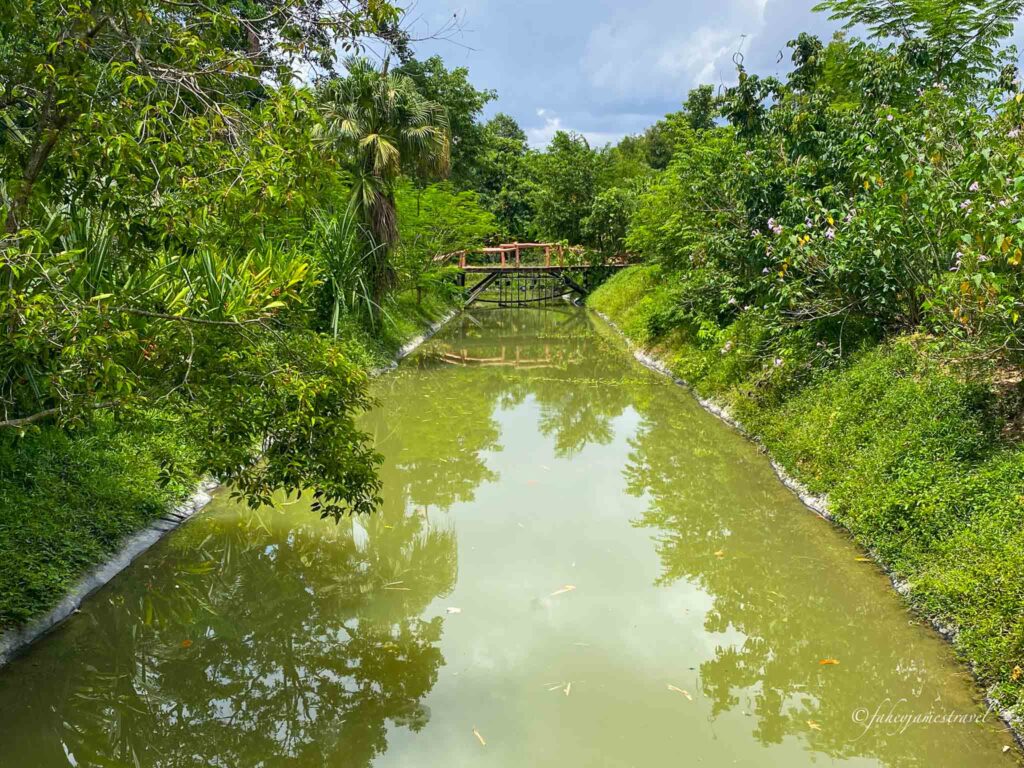
I found the experience very peaceful and close to nature.
I loved walking around, feeding the animals, and enjoying the grass, trees and plants.
If you don’t enjoy slow-paced experiences, large green spaces and seeing animals in enclosures, this place may not be for you.
🛺 Book This Angkor Botanical, Apopo, Killing Fields & City Tour 🏙️
Best Time To Visit And How Long To Spend There
The best time to visit is early in the morning, before the crowds arrive and the heat builds.
I arrived around 10.30 AM, and it was perfect.
There were no large crowds, just a few people I passed now and then as I explored the garden. I spent two and a half hours here, which felt just right. It gave me enough time to enjoy the animals, plants and surroundings.
You could explore it in less time, but I like to take things slowly.
🇰🇭 Discover The Best Things To Do In Cambodia 🇰🇭
Opening Hours, Entry Fee And The Closing Day Mix-Up
The garden is open from 08.00 AM to 06.00 PM daily, except Tuesday.
How To Get To Angkor Botanical Garden From Pub Street
From Pub Street, it’s a 3.6-kilometre walk, but I wouldn’t recommend walking because the road is busy.

Instead, take a tuk-tuk. It takes about 10 minutes and costs around KHR 12,172 ($3.00/€2.68/£2.27).
You can use PassApp to order one, or flag one down on the street.
🕍 Explore Tomb Raider Temple With My In Depth Guide 🕍
My Route Through The Gardens
I started at the fish ponds, where I fed the large gold and orange fish.

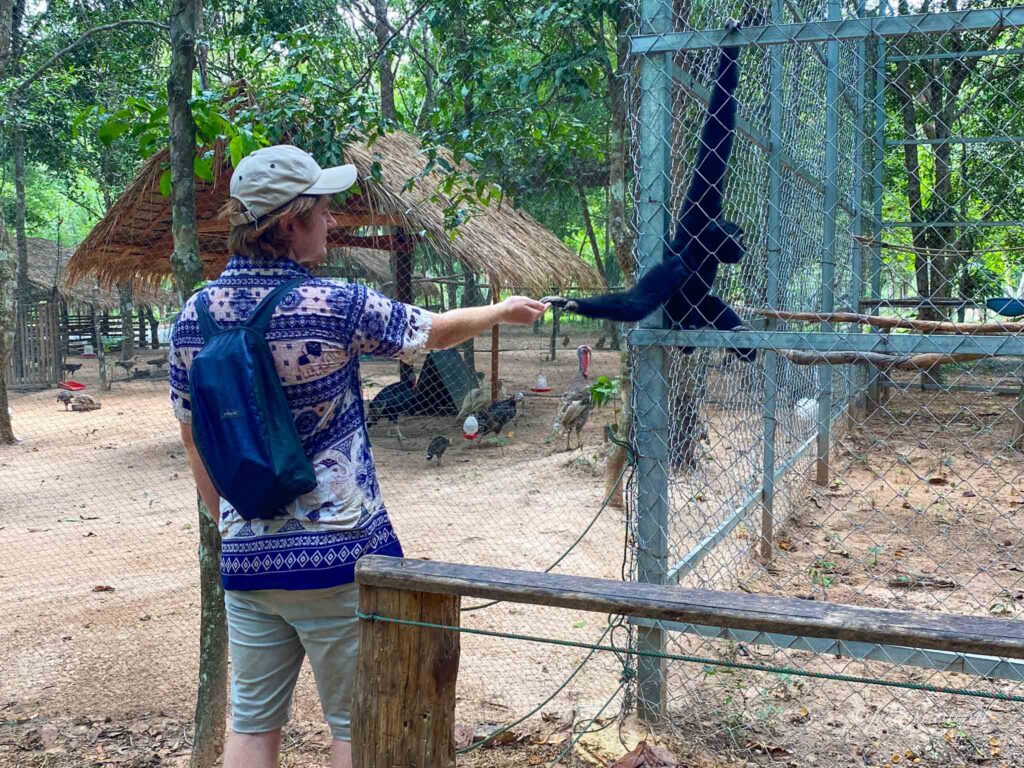
After a short time there, I came across a monkey eating a banana.
It seemed very interested in me but looked sad. Thankfully, a large sign explained that the monkeys were staying temporarily while being prepared for release into the wild.
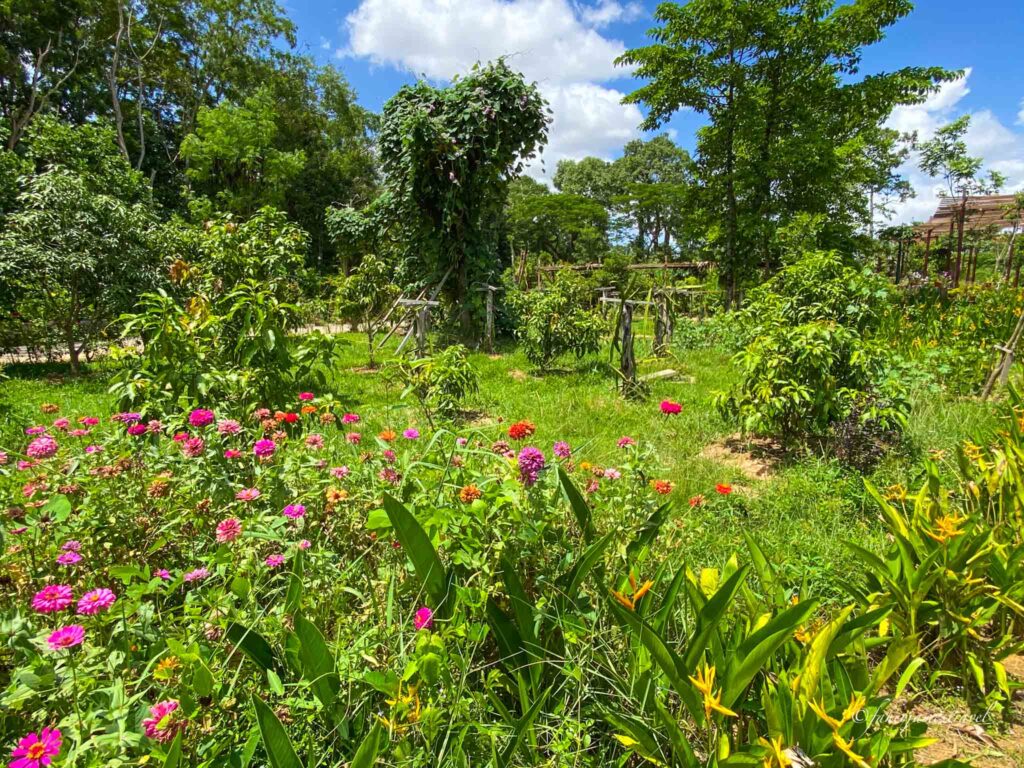
After passing the Rukha Cafe & Restaurant, I admired the pink, magenta, red and orange zinnias. I also noticed plants with spiky green leaves, which I think were likely heliconias or lilies.
I skipped the public library and headed straight to the large guitar-shaped platform on the pond, which was my favourite part. After a few selfies, I went to see the ostriches. There was long green grass that we could freely use to feed them. They looked a little aggressive, but they just wanted to eat.
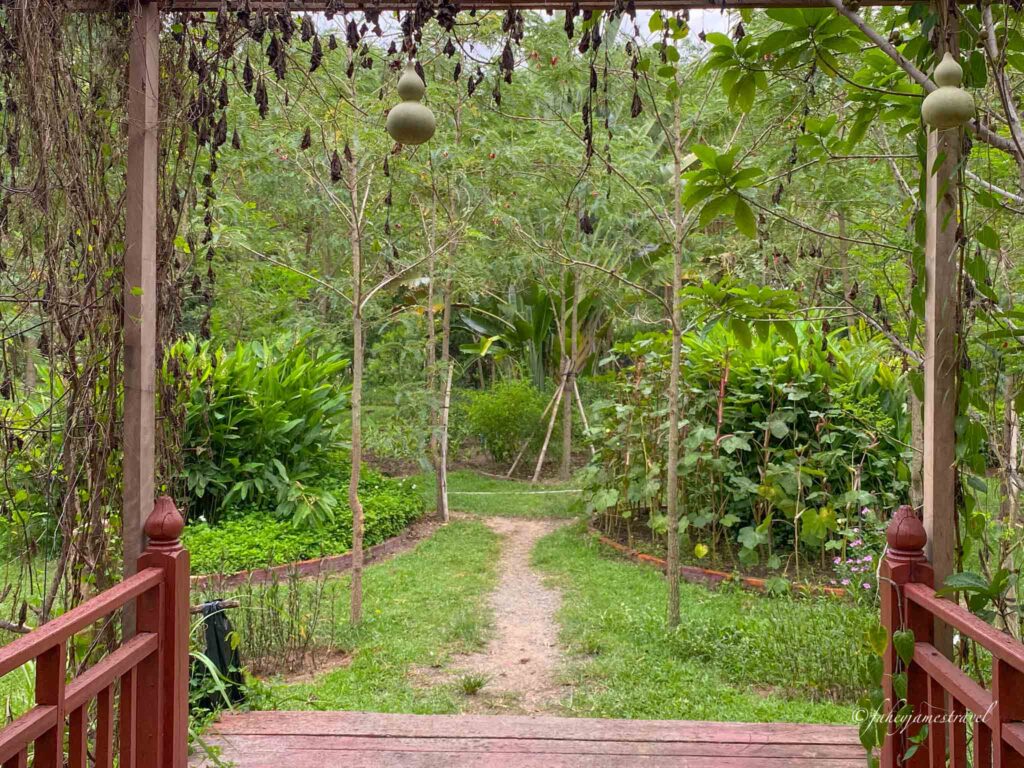
As it grew hotter, I found a shaded pergola walkway that offered some welcome shelter from the sun. Square stepping stones led me along the path to a round wooden door with vertical planks and a small handle, set into a thick concrete ring. I wanted to open it, half expecting to find fairies or a character from The Lord of the Rings, but I didn’t get the chance.
I loved the quirky concrete head statues dotted around the garden.
Where To Eat, Drink And Take A Break
You can eat inside the gardens.
Rukha Cafe & Restaurant is the only real option for food and drinks.
A hot or cold coffee costs between KHR 8,115 and KHR 10,144 ($2.00 to $2.50/€1.79 to €2.24/£1.51 to £1.89). A chicken curry costs KHR 34,488 ($8.50/€7.60/£6.42), while beef lok lak costs KHR 32,459 ($8.00/€7.15/£6.05).
The restaurant is normally open from 07.30 AM to 05.30 PM, so plan your food or coffee break within those hours.
🥗 Read My Guide To The Best Restaurants In Siem Reap 🍱
The Wildlife Area
The wildlife area was a big surprise, and I had mixed feelings about it.

I loved feeding the ostriches and holding hands with the monkey, though seeing the monkey initially made me sad.
Knowing it was being cared for and would soon be released into the wild helped me feel better about it. In the end, I felt it was a good thing.
I later checked Facebook over three years later (I visited in 2023) and saw a similar black monkey still in the cage. If it’s the same one, that’s very disappointing, but I don’t know the full story.
The birds were beautiful, but I don’t remember seeing many insects.
The whole experience made me think deeply about animals being used for tourism, and to this day, I still don’t have a clear conclusion.
🇰🇭 Explore Cambodia In Two Weeks With My Itinerary 🇰🇭
Mistakes To Avoid At Angkor Botanical Garden
Eat a big breakfast before you go.

There are toilets in the restaurant and outside, so you can comfortably explore the gardens.
I would bring a large bottle of water, rather than a small one, to keep you hydrated before and after you enter on the day. But you’ll have to leave it at the entrance because it’s not allowed inside. It’s better to have it afterwards, when you’ll be dying of thirst.
Wear sunscreen too. Although there is plenty of shade, it’s worth protecting your skin and reapplying sunscreen a couple of times throughout the day. If you’re pale like me, I think it’s a wise choice.
I wouldn’t visit the garden on the same day as the temples.
You’ll be exhausted after the 04.00 AM start for sunrise. A visit later in the day might be manageable, but I’d save Angkor Botanical Garden for a rest day when you fancy a leisurely stroll rather than sitting around.
How To Fit It Into Your Angkor Temple Days
I don’t think squeezing the garden into your temple days is a good idea.
I could barely move the evening I got home after the 04.00 AM start for sunrise at Angkor Wat.
I then spent two more days exploring the temples, though thankfully without such an early start. For me, there are two reasons to keep them separate: temple days are tiring, and spending an hour or two at the garden takes time away from the temples.
I recommend giving the temples at least three full days. In my view, one day isn’t enough. I considered the seven-day ticket but initially thought it was too much. For a more thorough visit, though, it makes sense. Next time, that’s what I’ll choose.
Pairing the garden with Angkor National Museum makes more sense to me.
They’re about a 30-minute walk apart, or barely 10 minutes by tuk-tuk, so you can combine indoor and outdoor exploring in one day.
Where To Stay Near Angkor Botanical Garden
Angkor Botanical Garden is so close to Siem Reap that I recommend staying in the city.

I’ve written a dedicated guide on Where To Stay In Siem Reap to help you choose.
I stayed at Roumdoul, where the pool was great, the staff were helpful, and the rooms were spacious, with a huge balcony. Anywhere close to Pub Street, Old Market or the French Quarter will do nicely.
I still remember drying my T-shirt on the balcony as thunderstorms erupted across the sky like an atomic bomb exploding.
A Short History Of Angkor Botanical Garden
The garden was previously known as Angkor Spice Garden, something I only learnt well after my visit.

In 2005, it covered just two hectares.
Today, it spans 150 hectares. The APSARA National Authority manages the garden as well as Angkor Archaeological Park.
It was created not only to give people a peaceful place to visit, but also to prevent encroachment on the land and protect its natural resources. People argued that the spice plants were needed to treat those who were ill.
As I walked through the garden, the plants gave off strong, fresh scents.
There have been over 600,000 visits since it opened. I find it hard to believe that such a beautiful place is free to enter.
Today it is home to spice plants and animals, including monkeys.
Would I Go Back?
Yes, in a heartbeat, but with one caveat: only if I had the time.

As I’ve said in some of my other Siem Reap posts, I’d skip it if I were short on time.
It’s a beautiful setting, with animals, plants and art that make it a nice place to spend time, whether you’re solo or travelling with others.
If you enjoyed this post, check out my guide to the best things to do in Siem Reap.
Any questions? Just drop me a message.
Thanks for reading,
James
- Angkor Botanical Garden: Is Siem Reap’s Free Garden Worth It?
- Tomb Raider Temple (Ta Prohm): My Honest Guide From Angkor
- Things To Do In Cambodia (2026): My Honest Guide After Visiting
- My Two Weeks In Cambodia Itinerary (From Someone Who Spent Nearly A Month There)
- How To Visit Angkor Wat In 2026