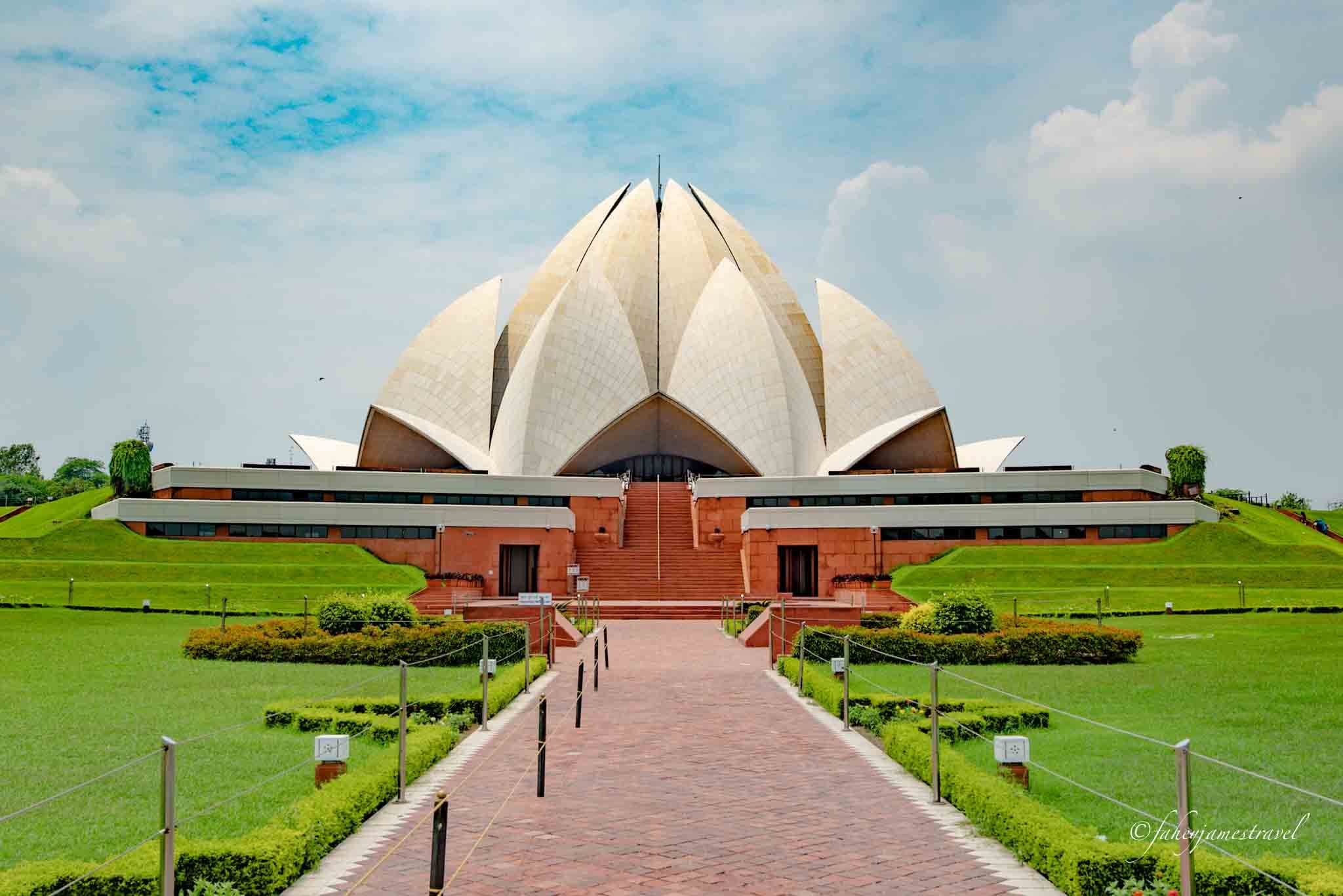
Lotus Temple Nearest Metro Station (Kalkaji Mandir, With Walk Time)
What Is The Lotus Temple’s Nearest Metro?
The nearest metro station to Lotus Temple is Kalkaji Mandir, a five minute walk from the gates.
I’ll be honest, working this out before my trip took longer than it should have. Every blog said something different. Some said Nehru Place, some said Kalkaji, one reckoned it was twenty minutes on foot. So here’s the real answer.
Kalkaji Mandir sits on the Violet and Magenta lines, roughly 400 to 500 metres from the temple. That’s a proper five minutes, not the kind that turns into twenty once you’re stood there sweating in the Delhi heat.
Okhla NSIC, also Magenta Line, is closer to ten minutes. Nehru Place is the furthest of the three at about twenty minutes according to Google Maps, so I’d only use it if it suits your route better.
Walking it is safe by day and well signposted once you’re out of the station. I did it solo with a backpack and never felt uneasy, though the road crossings near Kalkaji get chaotic, so keep your head up rather than your phone.
Disclosure: Some of the links on this page are affiliate links, which means that if you make a booking through them, I may earn a commission. See my Privacy Policy.
Here Are My Favourite Hotels In Delhi
🏩 Moustache Delhi – Check Availability Here
Lotus Temple Travel Vlog

Lotus Temple’s Nearest Metro Station Revealed
The nearest metro stop to the Lotus Temple, one of Delhi’s most visited attractions, is Kalkaji Mandir Metro.
That didn’t take long, did it?
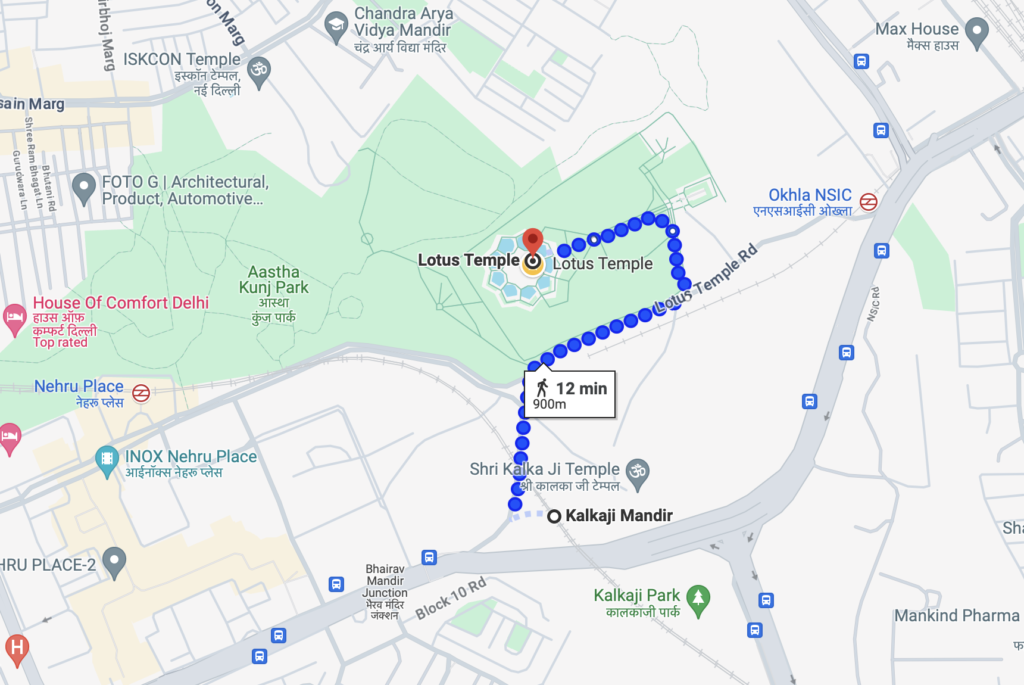
Should you be using the metro to get around Delhi (I highly recommend you do as it was fantastic every time we used it) then the violet line is what you need to keep an eye out for.
This will take you to the Lotus Temple.
Nehru Place (also on the violet line) and Okhla NSIC (magenta line) are good options but if you want to shave a couple more minutes off your journey then Kalkaji Mandir Metro is the best choice. Check out Delhi’s metro map in full.
Kalkaji Mandir Metro is about a 500-metre walk to the Lotus Temple. Use exit gate number 1 for the quickest route. When I visited, I wandered around not knowing where I was going. Don’t be like me.
Okhla NSIC is actually a few metres closer, but it takes longer to get there.
Also, you can discover what to wear in India before you get on the plane.
Is Kalkaji Mandir Metro Crowded?
Yes, the Kalkaji Mandir Metro can become extremely crowded and busy, especially at peak times.
Its proximity to the Lotus Temple, one of the city’s most visited places doesn’t help the situation. Shri Kalka Ji Temple is close by as is Iskcon Temple. Every day between 10,000-15,000 people enter inside and on the weekend it rises to 35,000.
Nehru Place is also a busy commercial district known as a major hub for IT products and services. It’s often busy due to the high volume of shoppers, business people, and tech enthusiasts visiting the area. When I visited in July, it was far less crowded than I expected, and I arrived at around 11.00 AM.
Do note that if you’re coming from Delhi Metro station, it costs ₹43 ($0.46/€0.39/£0.34) and takes around 40 minutes.
Delhi Tour Options
Below are some trusted tour options which would be amazing ways to see Delhi’s main attractions.
Some may even include the Lotus Temple:
- Delhi: 7 Days Golden Triangle with Ranthambore & Varanasi
- 3 Day / 2 Night- Delhi, Agra & Jaipur Golden Triangle Tour
- From Delhi: 15 Days Beyond the Golden Triangle Tour
- From Delhi: Private 3-Day Golden Triangle Tour with Hotels
Why Is The Lotus Temple So Popular?
Delhi is a city that attracts millions of visitors each year, and one of the top reasons is the Lotus Temple.
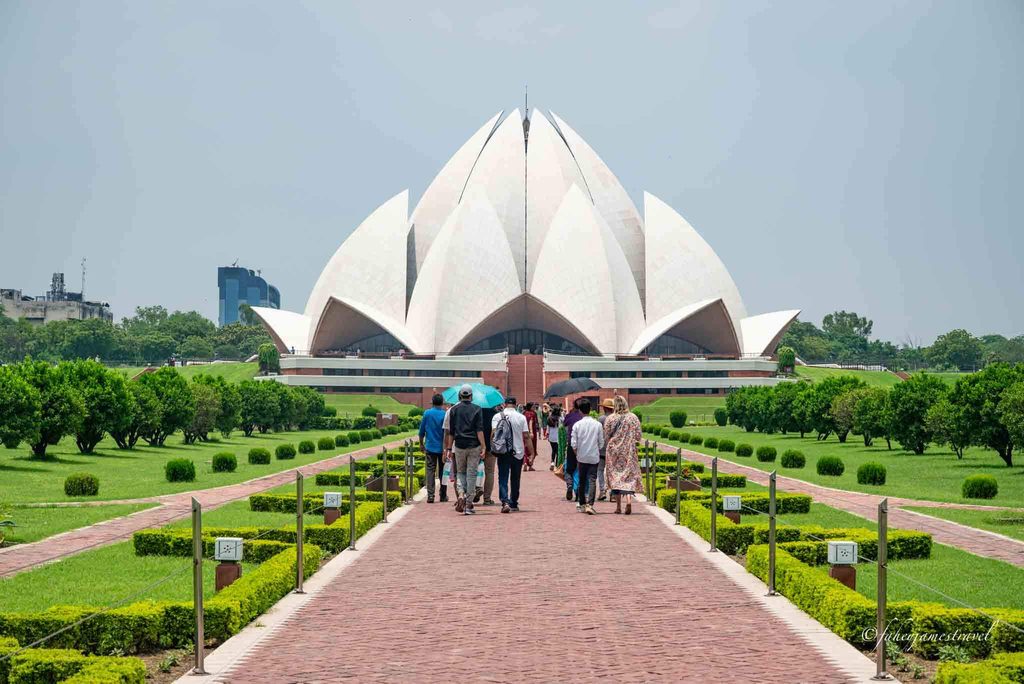
Its impressive structure, shaped like a lotus flower, represents the Baháʼí Faith.
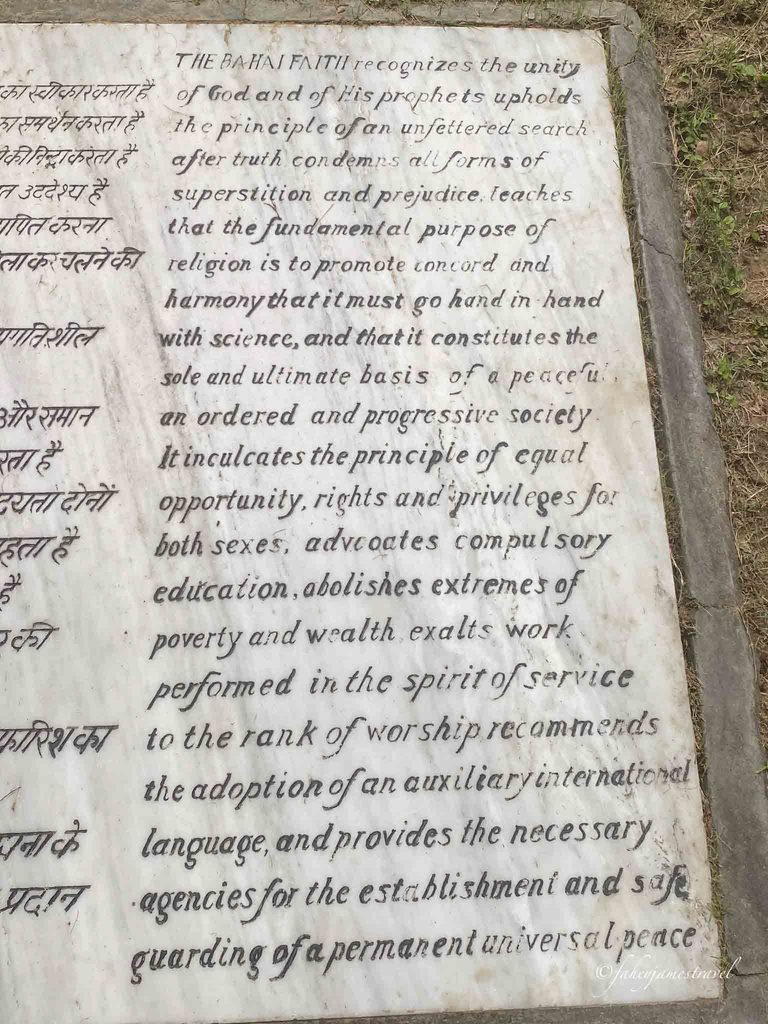
This faith emphasises the spiritual unity of all humankind. The Lotus Temple is more than just a place of worship; it’s a symbol of unity and inclusivity, embodying the very essence of the Baháʼí teachings.
I was upset that photography was not allowed inside the temple, but I had to live with it. When I visited the Lotus Temple, I was struck by its friendly atmosphere and the broad spectrum of visitors it welcomed.
People from different walks of life, various religions, and diverse cultures all gathered together under one Lotus-shaped roof. That feeling of inclusivity was really something special.
What I didn’t expect was to become part of the attraction myself. I was stopped for selfies more times than I could count, by families, by groups of teenagers, by an older man who just wanted a photo with “the tourist.” It happened at other sites too during my three weeks in India, but never quite as often as it did there. Slightly strange, genuinely funny, and honestly one of the things I remember most about the visit.
Plus, entry to the Lotus Temple is free, making it accessible to literally everyone who comes to Delhi.
Its fascinating history and the beautiful message it carries are what make the Lotus Temple a must-visit when you’re in Delhi.
Lotus Temple History
The Lotus Temple was built in 1986.

Its creator is an Iranian, Fariborz Sahba who found inspiration from the Lotus flower. The temple is made of pure white marble.
I found it unthinkable that its marble originated from the same place as the Acropolis in Athens.
The Lotus Temple was designed as a space where people of all religions could come together.
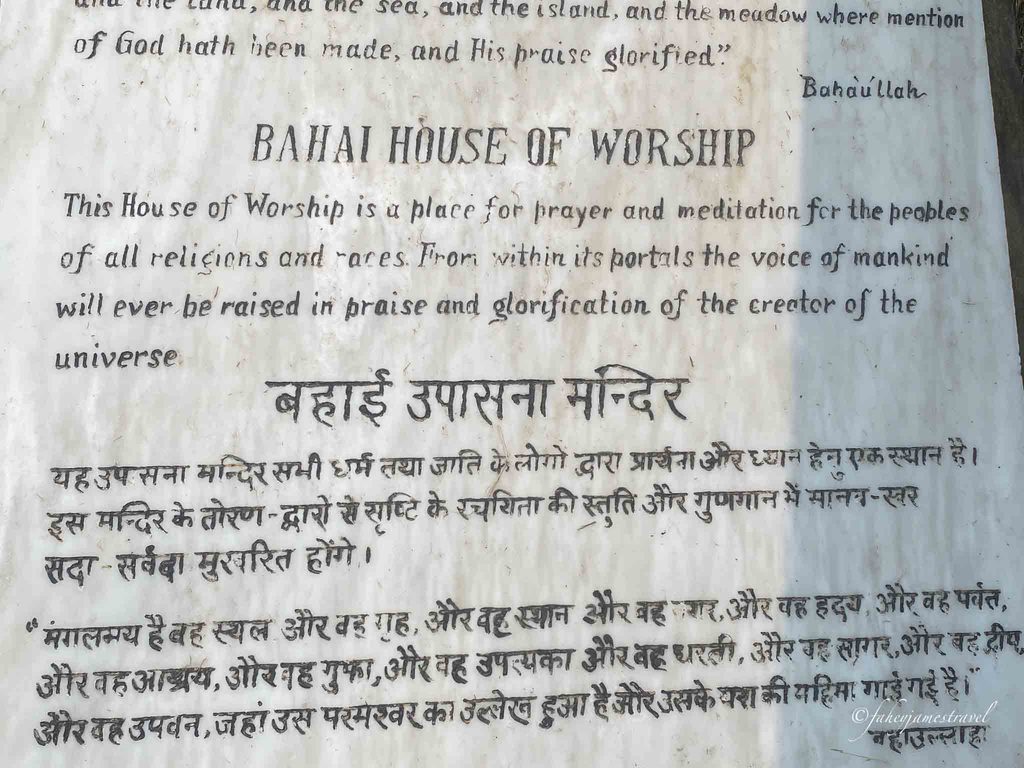
It aligns with the Baháʼí Faith’s focus on peace and unity among all religions.
I could feel this welcome atmosphere when strolling around the premises. The Lotus Temple is one of just seven Baháʼí Houses of Worship worldwide, each with a design that embraces natural elements.
Delhi’s Lotus Temple has 27 marble “petals” that accurately look like a lotus blossom. It took a decade to build and has won plenty of architectural awards since then.
Surrounded by nine ponds and lush gardens, the Lotus Temple is a peaceful escape from the city’s busy streets.
It’s a tranquil space for reflection.
Lotus Temple Opening Time
The Lotus Temple operates on a weekly schedule.

It remains closed on Mondays. From April to September, the temple is open from 08.30 AM to 07.00 PM.
However, from October to March, the operating hours are slightly reduced, with the temple opening at 08.30 AM and closing at 5.30 PM. I suggest spending at least an hour walking around the temple grounds, visiting the museum, and going inside.
You will probably end up chatting with people from all over India, which is exactly what happened to me.
Which Gate To Exit From Kalkaji Metro Station For Lotus Temple?
Exit through gate 1.
This is the fastest way to get there.
Is Kalkaji Mandir And Lotus Temple The Same?
No. Kalkaji Mandir isn’t a temple name at all, it’s the name of the metro station and the surrounding neighbourhood, taken from Shri Kalka Ji Temple, the Hindu temple I mentioned earlier that sits nearby.
The Lotus Temple is a completely separate site, a Baháʼí House of Worship a short walk away.
So when people say “get off at Kalkaji Mandir for the Lotus Temple,” they’re naming the station, not the temple you’re actually visiting.
Getting To The Lotus Temple In Short
The Lotus Temple in Delhi is a place where everyone, regardless of who they are or where they come from, feels welcomed.
Found in the heart of this busy city, it’s a peaceful place that stands for unity and inclusivity. Getting there is mostly a breeze with Kalkaji Mandir Metro station just a stone’s throw away. Yes, it can get a bit crowded, but that’s all part of the Delhi charm.
So when you’re in the city, visit the Lotus Temple. It’s an experience I promise will be memorable and make you glad you went.
I also have a post about spending three days in Delhi, so if you’re going to the capital it should help.
Thanks for reading,
James
FAQs
Which Line Is Kalkaji Metro Station?
Kalkaji Metro Station is the Violet Line. It is the Lotus Temple Nearest Metro Station and can be reached in about 40 minutes from Delhi Metro Station.
How Far Is Lotus Temple From Delhi Railway Station?
The Lotus Temple is about 30-minute drive from Delhi Railway Station. If you travel in a rickshaw this will be about 10-15 minutes. Traffic can be extremely slow in Delhi so rickshaw are a great way to travel faster.
Where Is The Lotus Temple?
The Lotus Temple is found at the following address: Lotus Temple Rd Bahapur, Kalkaji, New Delhi, Delhi 110019, India
- My Two Weeks In Cambodia Itinerary (From Someone Who Spent Nearly A Month There)
- How To Visit Angkor Wat In 2026
- Best Restaurants In Siem Reap: Where To Eat And What To Order
- Where To Stay In Siem Reap In 2026 (Neighbourhoods And Hotels)
- 3 Days In Siem Reap, Cambodia (And What I’d Skip)


The lotus flower is regarded as the National Flower of India. Lotus symbolises beauty, purity and knowledge. It is an aquatic flower with round leaves floating on the water. It grows in freshwater lakes and shallow ponds.