3 Day Delhi Itinerary: Temples, Forts And Markets
Three Days in Delhi Done Right
Three days in Delhi is enough time to tackle the best of India’s capital.
I’ll be honest. Before I went, I had no idea what to expect. Everyone talks about the golden triangle like it’s a checklist, but nobody tells you what Delhi actually feels like once you’re standing in it.
So here’s the quick answer. Three days are enough to see the highlights properly. Not rushed, not lazy. Jama Masjid in the morning light, the Red Fort in the afternoon, Humayun’s Tomb before the crowds arrive. You’ll leave with a proper feel for the city, not just a stamp in your passport.
Now for the honest part.
Delhi is a lot. It’s loud, it’s chaotic, and if you’ve only travelled around North America or Europe, it will hit you differently. I’m still torn on whether “overwhelming” is even the right word, because what feels like chaos on day one starts to make sense by day three. I loved it for exactly that reason. It’s not trying to be comfortable. It’s trying to be itself.
I got chased down the street near Connaught Place by two guys, and for about ten seconds I thought my trip was over before it started. It wasn’t. It became one of those stories I tell more than any temple photo I took.
Whether you’re travelling as a couple or going it alone, this covers what to do, where to stay, without wasting half your trip figuring out rickshaw prices. Delhi rewards people who show up and stay a few days rather than rushing through on a layover. This is how to do exactly that.
Disclosure: Some of the links on this page are affiliate links, which means that if you make a booking through them, I may earn a commission at no additional cost to you. See my Privacy Policy.

🇮🇳 3 Day Delhi Itinerary Key Info 🇮🇳
- When To Visit: October to April is ideal, with cooler temperatures and less humidity.
- Get Your India E-Visa: Book your visa online well in advance of your trip.
- Stay Connected: I use Airalo For Fast and Reliable Service
- Top Things To Do In Delhi: Private Full-Day City Tour of Old and New Delhi, Qutub Minar Private Tour with Hotel Pickup & Drop Off, Old Delhi Food Tour: A Night Time Feast, Old Delhi Street Food Tour with Rickshaw Ride
- Get Trusted Travel Insurance – I Use Safety Wing
Your Map For A Three-Day Delhi Trip
Day 1
Morning – Connaught Place
Connaught Place is a modern part of Delhi where shopping and dining are the main things to do.
I noticed that the streets are three concentric roads perfectly designed for free-flowing traffic.
That is not often the case, however. Normally, there is lots of congestion. Eight roads feed into the ring road, all leading to the central park, but the park was closed during our visit.
You’ll find plenty of options for fashion, books, and other shopping needs throughout Connaught Place.
You can also easily access the metro here at Rajiv Chowk station.

During our visit, we saw many locals here chilling out and relaxing.
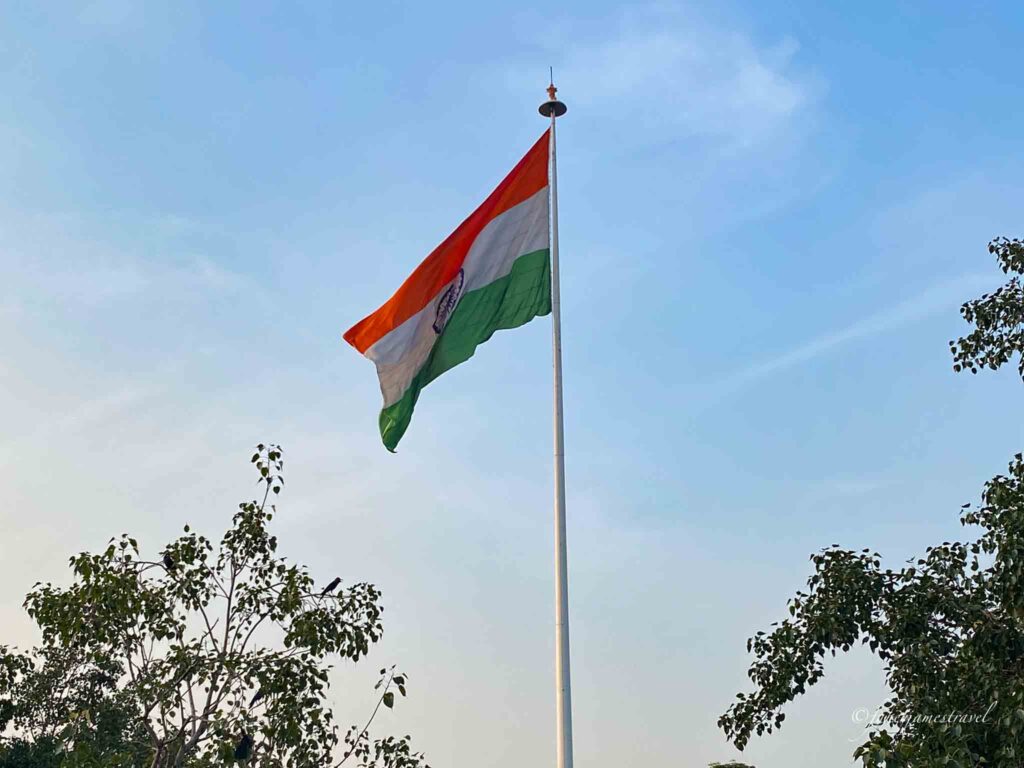
I could see the national flag standing tall from kilometres away in the centre of the park. It is huge at 90 by 60 feet. The park has public toilets called Sulabh Toilets, should you need to use them. You can have food and coffee at United Coffee House or Third Wave Coffee. At United Coffee House, I had a great butter chicken, which starts from 2,000 Rupees ($20.94/€18.34/£15.66).
When we visited Connaught Place, we also explored the Palika Bazar Underground Shopping Complex. Here we strolled through levels of vendors selling everything from shoes to phone accessories to PlayStation games. It was a fun experience to see an underground mall so close to Connaught Place, where shopping is much more expensive.
I did not buy anything, but some online reports said vendors try to overcharge and then drop the price from 1,000 Rupees ($10.47/€9.17/£7.83) to 200 Rupees ($2.09/€1.83/£1.57), so be smart and haggle. Unfortunately, once we were back outside, we had an unpleasant experience with two persistent harassers who followed us for about 250 meters. This was the only bad experience on our trip to India.
One claimed he didn’t want money (they always do), while the other was trying to sell something. They pursued us even as we walked faster, until we finally found safety in a restaurant to run into.
Later, they argued with each other, which gave us a chance to slip away.

Apart from that, you can explore Connaught Place easily on foot and shop.
I won’t lie. We ate at McDonald’s while we visited Connaught Place. We ate Tikka Masala Burgers, and while it was so unusual, I enjoyed it. It cost us between 200–400 Rupees ($2.09–$4.19/€1.83–€3.67/£1.57–£3.13).
Visit the Museum of Illusions too if you can.
- Opening Times: Most shops and offices open by 10.00 AM and close by 08.00 PM
- Recommended Time: 1-2 hours
- Cost: Free
- Address: New Delhi, Delhi 110001
Afternoon – Gurudwara Bangla Sahib
Gurudwara Bangla Sahib is one of the most prominent Sikh gurdwaras, or places of worship, in Delhi, India.
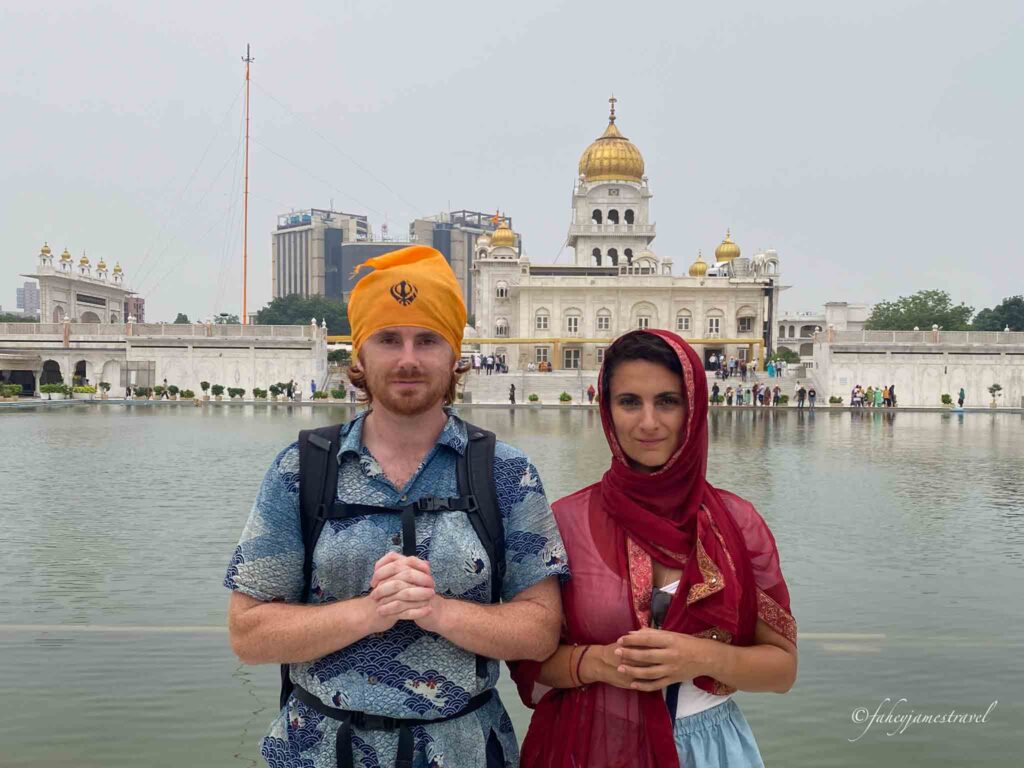
We were very much discouraged from taking photos inside the complex.
Our guide did capture one of us when exploring the outside of the premises. It was originally a bungalow belonging to Raja Jai Singh, which was later transformed into a gurdwara in the 18th century.
All people are welcome regardless of their own beliefs.
When we entered, we removed our shoes and walked through water to clean our feet. Then we were sent to a room for foreigners, where we would receive our turban and cover, so we could enter. It felt a little unusual for me, but this was my first time here, so I went with it.
We were shown around the temple very quickly (maybe 10 minutes) by an English-speaking worshipper who was very friendly and open to questions. But I recommend staying longer than that.
We had to walk with our hands held together in the middle of our torsos in order to show respect. He gave us a tour of the kitchen and informed us that throughout COVID, the temple was kept open as it could serve up to 35,000 each day.
When we visited, it was around 06.00 PM, and there were many people around then, but I do recommend going earlier in the morning when it is not as busy.
One of my favourite things to do in Delhi.
- Opening Times: 24 hours
- Recommended Time: 1-2 hours
- Cost: Free
- Address: J6G6+J6 New Delhi, Delhi, India
Evening – India Gate
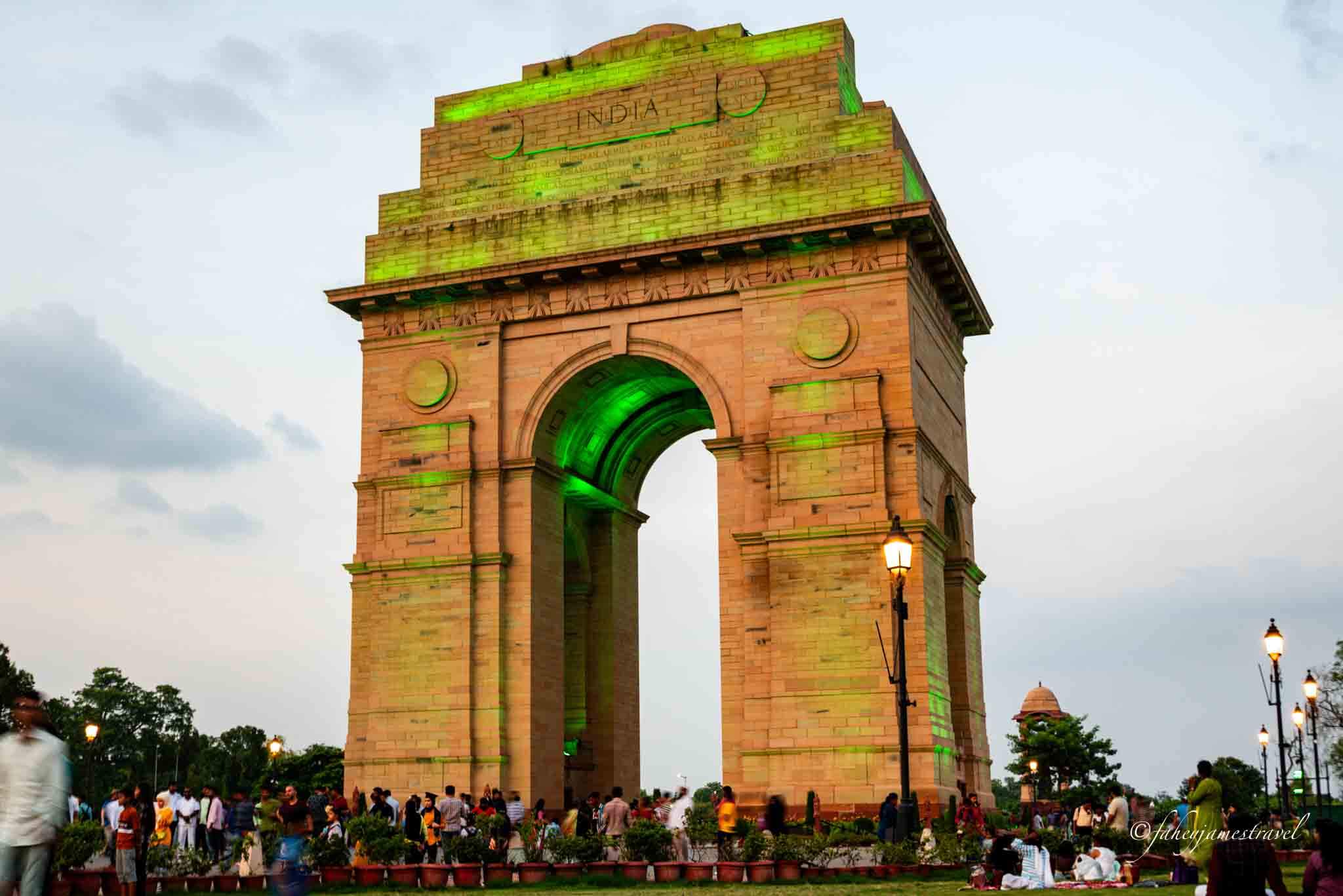
No trip to Delhi is complete without visiting the India Gate.
This monument is dedicated to the 70,000 Indian soldiers who died in WWI fighting for the British Army.
It looks very much like the Arc de Triomphe in Paris.
You’ll find locals and tourists relaxing on the grass along Kartavya Path, which leads to India Gate. Whether you’re lounging on the lawn or enjoying one of the live performances, it’s a perfect spot to experience how locals relax and socialise.
When we visited, I noticed a heavy presence of army and police officers guarding the park, but don’t be deterred. With so many people around and activities happening, I can see why this was necessary. During our visit, friendly strangers approached us for photos, and we happily posed with them.
We tried to immerse ourselves in the local culture, enjoying a live music performance in the park south of India Gate and watching a youth drama production beneath the arch.
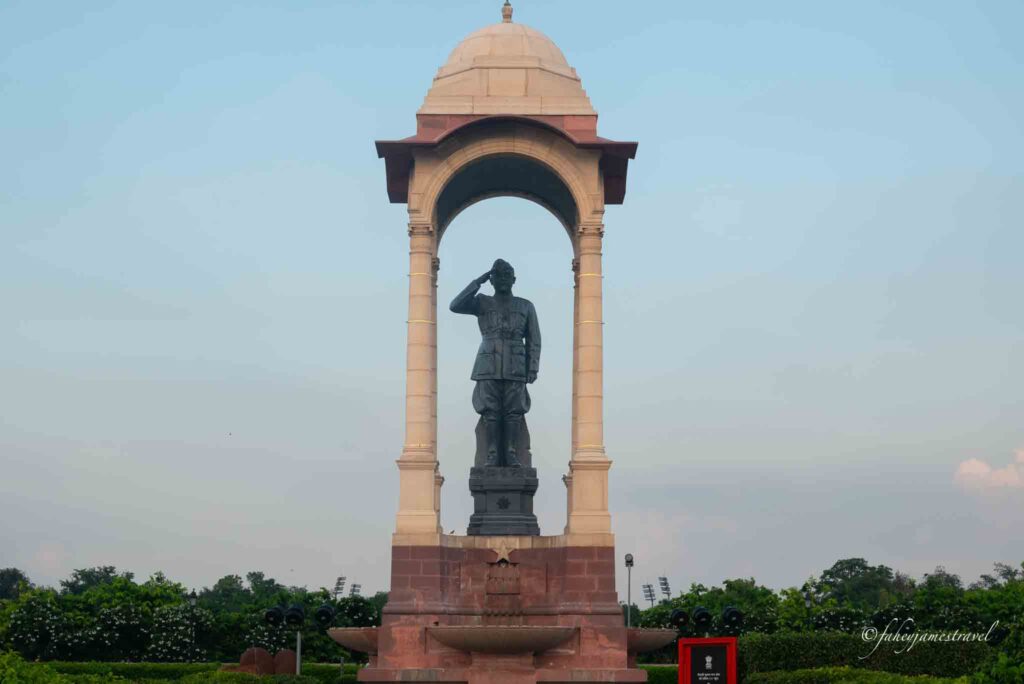
The parents watched their kids with smiles on their faces, so it was nice to experience day-to-day life in India’s capital.
Many people were buying food along Kartavya Path. I didn’t try anything, but the food looked and smelled good.
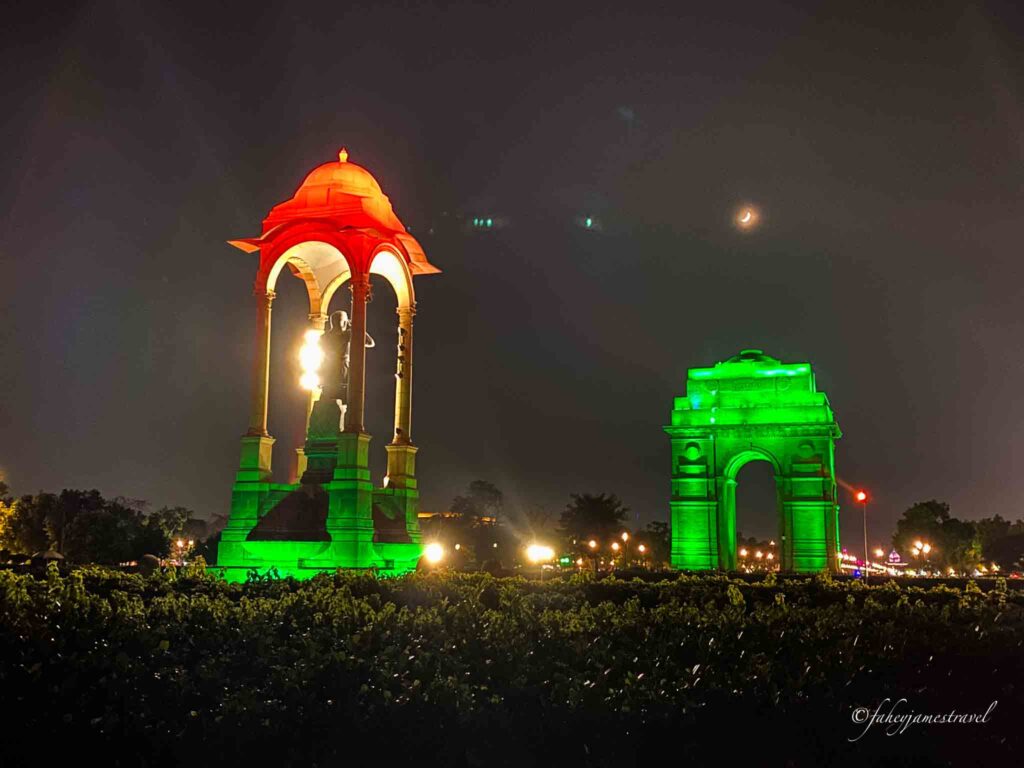
Near India Gate, you can also explore the National War Memorial, the Param Yodha Sthal, and the Children’s Park. When we arrived, we first saw the Netaji Subhas Chandra Bose Canopy statue, just meters from the India Gate. What I loved most about visiting in the evening was watching how the light changed.
We witnessed the India Gate beautifully lit up against the bright stars and moon in the sky. I have to say it made for a brilliant picture. Another fun thing to do was to try to spot the Presidential Palace at the opposite end of the India Gate complex. Sure, it’s over 3km away, but it’s a little bit of fun to see what is visible.
I recommend visiting around 06.30 PM to get a nice place to watch the sunset and hang around until the monument lights up at night.
- Opening Times: 24 hours
- Recommended Time: 1-2 hours
- Cost: Free
- Address: Kartavya Path, India Gate, New Delhi, Delhi 110001, India
Day 2
Morning – Jama Masjid
Located a little more than a kilometre from the Red Fort, Jama Masjid is one of the biggest mosques in India.

Jama Masjid was completed in 1656, and when at full capacity can hold 25,000 people.
Many blogs incorrectly stated it was free to enter. In reality, we paid 300 Rupees each plus 50 Rupees for leg coverings. Since we weren’t carrying cash, we had to visit an ATM and return, which took about an hour.
Off we went into Chandni Chowk, and it was an intense experience. So many people, so much noise, and it had a busy atmosphere to say the least, so make sure you bring cash. When we visited, we entered from the East through Meena Bazaar, which is one of the most active and lively bazaars I can remember experiencing in India.
As I walked through the tight bazaar, I couldn’t help but rub shoulders and arms with others as we made our way along the road.

This was intense, as there was a lot going on around you.
I wouldn’t say I felt unsafe in the bazaar, but I did hold my camera tightly. Also intense are the roads that surround the Jama Masjid. Urdu Bazaar Road and Jama Masjid Road. Don’t expect the rules of the road to apply here, and the road itself will be covered in people, animals, rickshaws and cars. Expect the unexpected.
It’s loud and disorganised, but it works. It’s fun to just walk around the mosque.
During my visit, I walked fast around it as it got a little uncomfortable the longer we stayed there. Before you enter the mosque, your eyes will be led to the red sandstone and white marble colours, which feature three great gates, four towers, and two minarets.
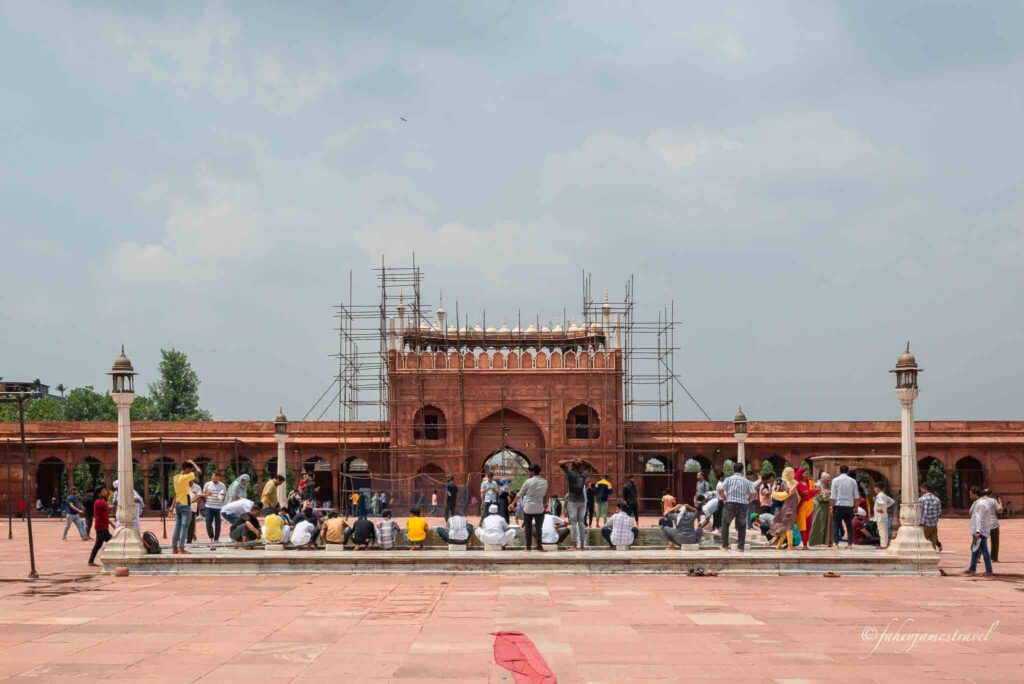
I walked around the premises and enjoyed the mosque and two minarets.
You can climb the southern minaret and take in excellent views of Delhi from above. Again, we took some pictures together, resulting in about 50 other people wanting photos with us.
This lasted about 30 minutes, but an official at the entrance to the mosque saw what was happening and told us that some people pickpocket tourists when taking photos here, so we put an end to the photo shoot and apologised in case we upset him.
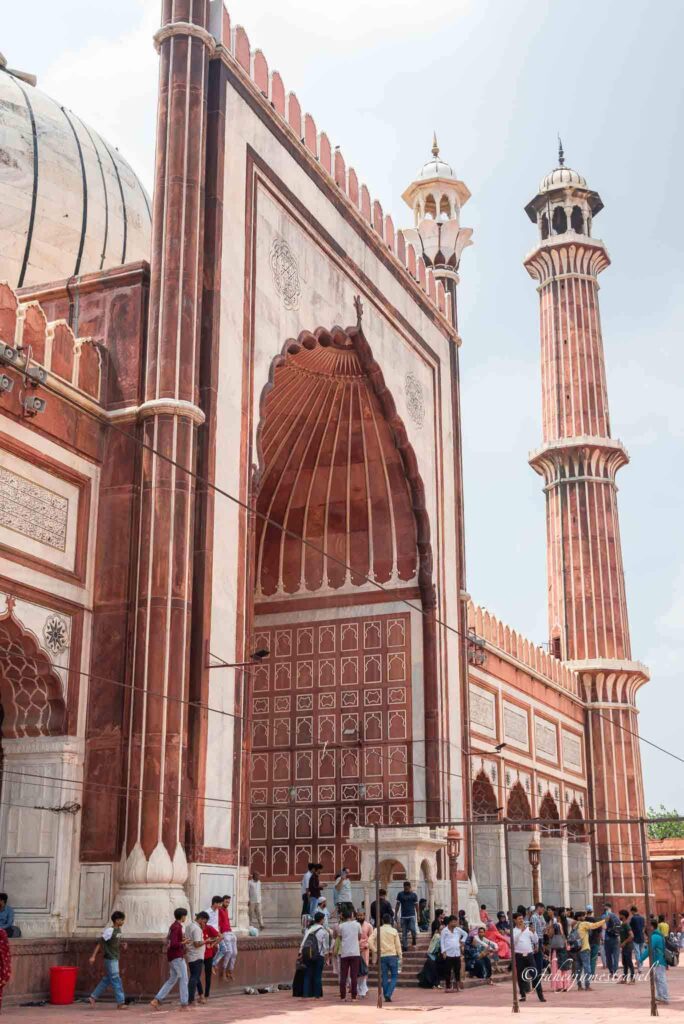
You should bring socks because the hot ground will burn your feet.
When Lupe took off her sandals, as is normal when entering a mosque, the ground was so hot from the sun that it hurt.
Even in my socks, it was painful, so try to limit the foot damage. There is a carpet that crosses through the centre of the premises, but most people walk along it, so you will have to veer off a lot anyway.
- Opening Times: 07.00 AM to 12.00 PM and again from 01.30 PM to 06.30 PM
- Recommended Time: 1-2 hours
- Cost: 300 Rupees ($3.14/€2.75/£2.35) for the camera fee and 100 Rupees ($1.05/€0.92/£0.78) to climb the minaret, 50 Rupees ($0.52/€0.46/£0.39) for leg coverings.
- Address: M62M+79 Delhi, India
Afternoon – Red Fort
A short walk from the Jama Masjid can take you to the surreal Red Fort.
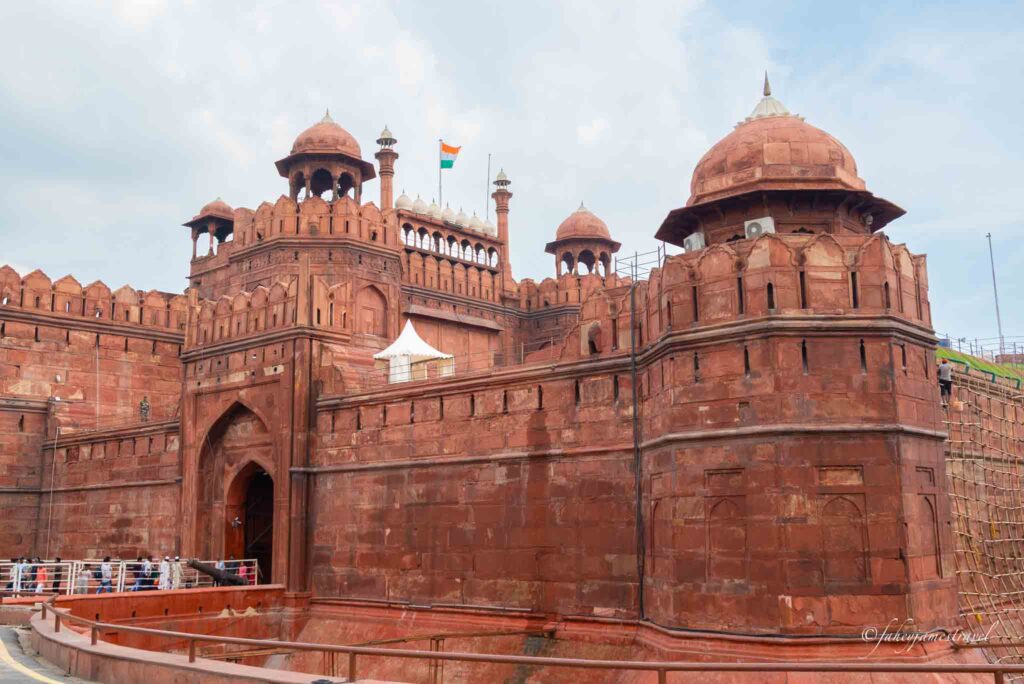
Again, this place is closed on Mondays, so adapt your plan in case you are in Delhi on Monday!
The fort was built by the Mughal Emperor Shah Jahan in 1639 as a palace for his new capital, Shahjahanabad. The fort’s construction was completed in 1648, after nearly a decade of work, and the fort served as the main residence of the Mughal emperors for nearly 200 years.
The history nerd in me got too excited when I reached this UNESCO World Heritage Site. The Diwan-i-Khas, or Hall of Private Audience, is one of the most impressive buildings in the fort.
It was used by the Mughal Emperor to meet with important guests and dignitaries. The Moti Masjid, or Pearl Mosque, is a beautiful white marble mosque located within the fort’s walls.
When I visited the Red Fort, I have to say that the most captivating part was the Red Fort Lahori Gate, which stands 33 meters high at its peak and perfectly encapsulates Mughal architecture.

The fort was the site of several important events in Indian history, including the Indian Rebellion of 1857 and the Indian Independence Day celebrations.
Walking around the corner of the wall, I found myself facing one of the most beautiful entrances I’ve seen in India. Once inside, I was surprised to see just how big the complex was. It is full of palaces, halls, and gardens that impressed me so much. It’s 254 acres in size.
Also inside is the Indian War Memorial Museum, which provides a great insight into India’s past. The museum focuses on British Imperialism in India, and it is striking to learn about India’s history as an Irishman with some parallels. I would easily recommend getting a ticket to the museum if you have come this far.
There is a nice restaurant called Cafe Delhi Heights inside, too, where we had lunch, and it was very tasty and filling. I recommend trying some spicy Paneer Tikka for 185 Rupees ($1.94/€1.70/£1.45).
If you have limited time to explore, ensure the Red Fort is included in your Delhi itinerary for 3 days.
- Opening Times: 09.30 AM – 05.00 PM, closed on Mondays
- Recommended Time: 3-4 hours
- Cost: 550 Rupees ($5.76/€5.04/£4.31) per person
- Address: Netaji Subhash Marg, Lal Qila, Chandni Chowk, New Delhi, Delhi, 110006, India
Evening – Humayun’s Tomb
Visiting Humayun’s Tomb sparked my passion to learn more about India’s rich history.
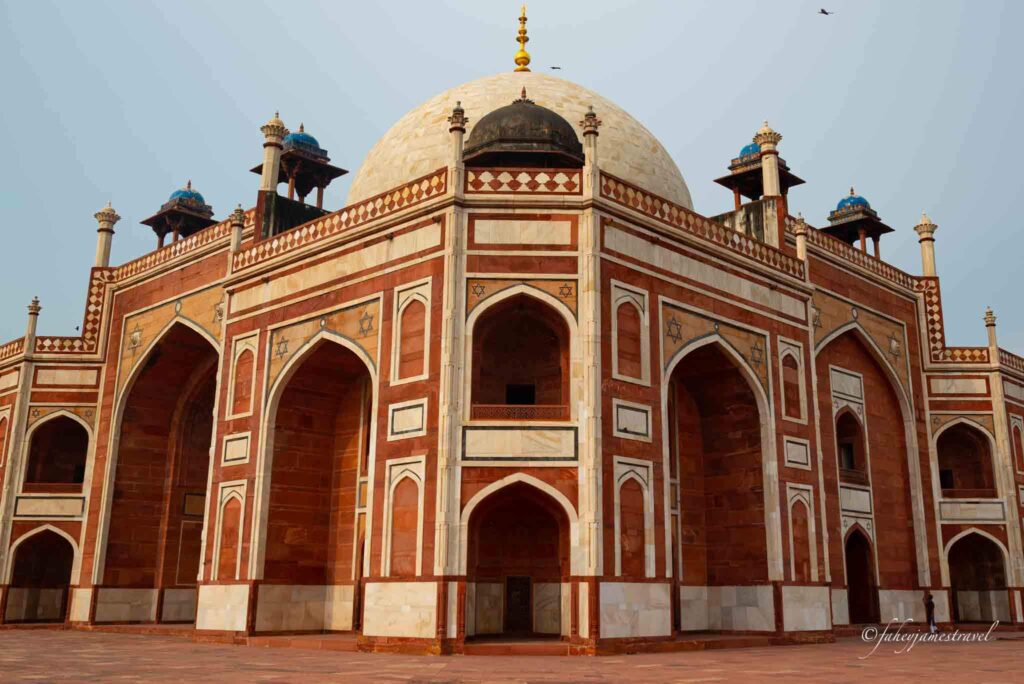
The monumental site is the resting place of Humayun, the second emperor of the Mughal Empire in India and has UNESCO World Heritage status.
He was the son of Babur, the founder of the Mughal Empire, and ascended to the throne in 1530.
When we visited this place, I was blown away by the architecture, symmetry, beauty, and colour. I was delighted to discover the other impressive structures inside the complex. For example, Isa Khan’s Tomb, Bu Halima Gateway, and Gurudwara Damdama Sahib are some fascinating constructs within the tomb grounds that I thoroughly enjoyed exploring.
Walking around this place made me feel like a Mughal emperor roaming the land and the monuments that are scattered all over the city.
It was commissioned by Humayun’s wife, Empress Bega Begum, after he died in 1556. He also patronised the arts and sciences and is credited with bringing Persian culture to India.

However, his reign was cut short when he died in 1556 after falling down a flight of stairs in his library.
The Mughals love symmetry in their architecture, and this tomb is grand on the highest level. Walk around the greater grounds, which possess a nice garden and are divided by causeways and water channels. Lastly, I loved the tomb itself.
While it was beautiful, it was also deeply moving to sit beside it and contemplate the immense power this leader wielded during his reign as emperor.
- Opening Times: 06.00 AM – 06.00 PM
- Recommended Time: 1-2 hours
- Cost: 600 Rupees ($6.28/€5.50/£4.70) per person
- Address: H7V2+87 New Delhi, Delhi, India
Day 3
Morning – Lotus Temple
The Lotus Temple in Delhi is worth your time on a 3-day trip.
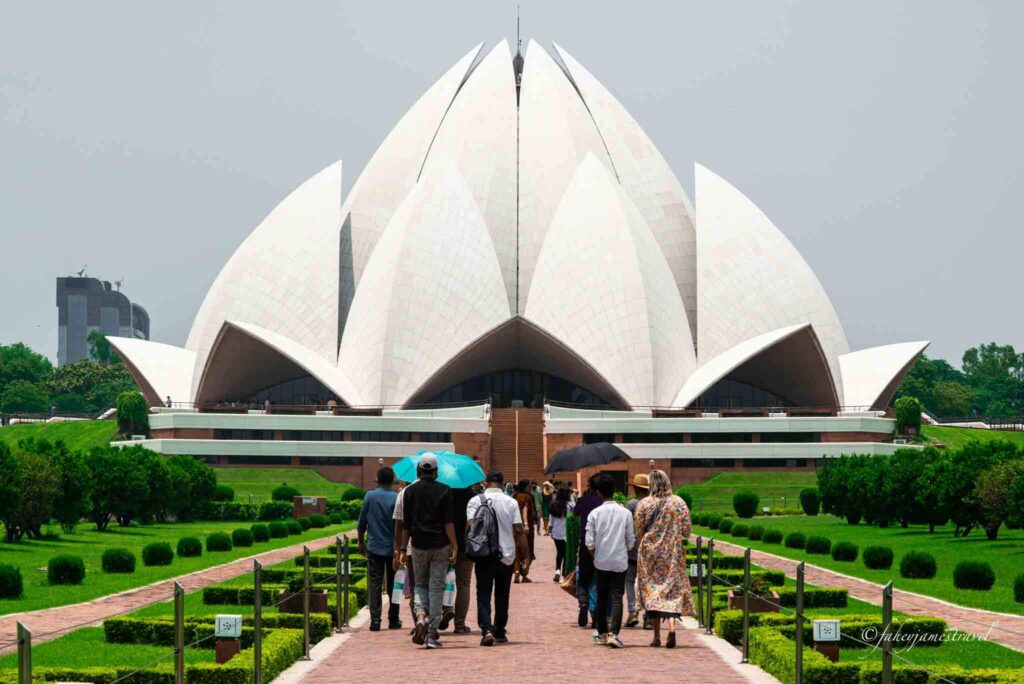
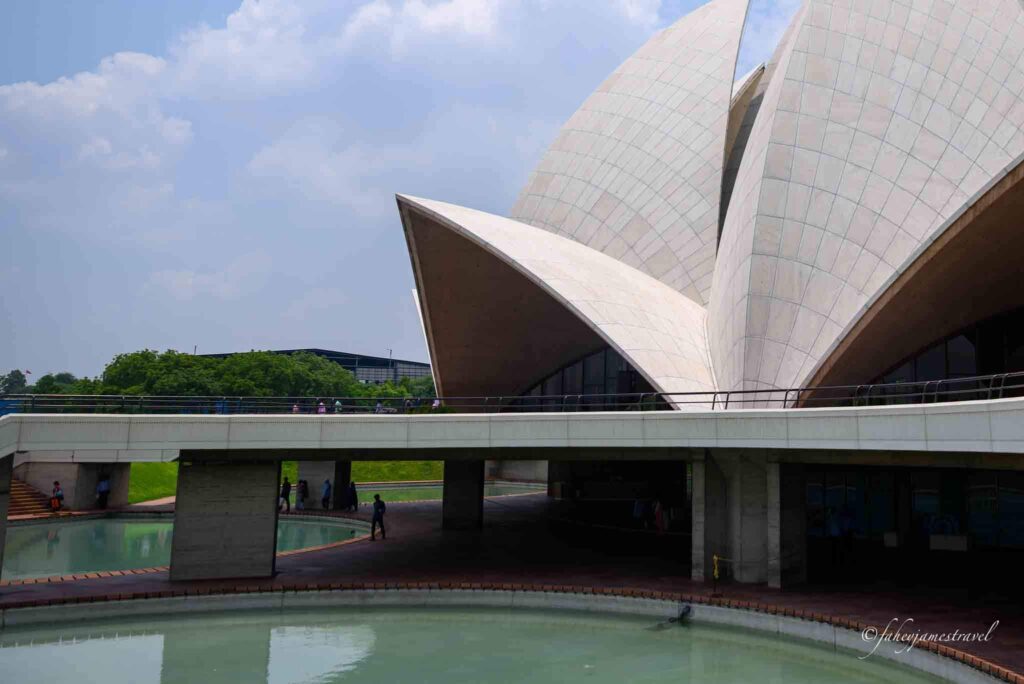
The temple is a Baha’i temple whose religion came about in the 19th century. The Baha’i mission is to unite all people of the world regardless of race, religion or creed. As the name suggests, the temple is designed as a lotus.
In India, the lotus is a significant symbol in Hinduism, representing spiritual enlightenment, beauty, fertility, prosperity, and eternity.
It is believed that every Hindu has a lotus flower in their heart, and when this flower blooms, they achieve enlightenment. When we visited the Lotus Temple, we were impressed with the vast green gardens all around the temple, which were perfectly maintained.
A long walkway flanked by beautifully maintained gardens leads you to the temple.
Inside, while cameras aren’t allowed, you can sit quietly and admire the temple’s unique nine-sided circular architecture.
Don’t miss the impressive Baha’i Museum, which many visitors skip. I saw loads of people go straight to the temple without checking the museum. The museum is easily worth a visit for its display and information about the faith’s core values of community and unity. You can learn about the fascinating origins of the Baha’i faith. The faith’s message of unity has earned respect and support from world leaders.
Remember, photography isn’t permitted inside.
Be prepared – Lupe and I took a selfie together, which resulted in a chain reaction of about 50 people who stopped us for photos, which we more than happily obliged. This was our first taste of the good nature of the Indian people, which we experienced every day throughout our 3 weeks in the Golden Triangle.
We keep in contact with many of these people to this date. We were as interested in them as they were in us.
- Opening Times: 08.30 AM – 06.00 PM, closed on Mondays
- Recommended Time: 1-2 hours
- Cost: Free
- Address: Lotus Temple Rd Bahapur, Kalkaji, New Delhi, Delhi 110019, India
Afternoon – Qutub Minar
Another UNESCO World Heritage Site, the Qutub Minar, blew me away with its history and stature.
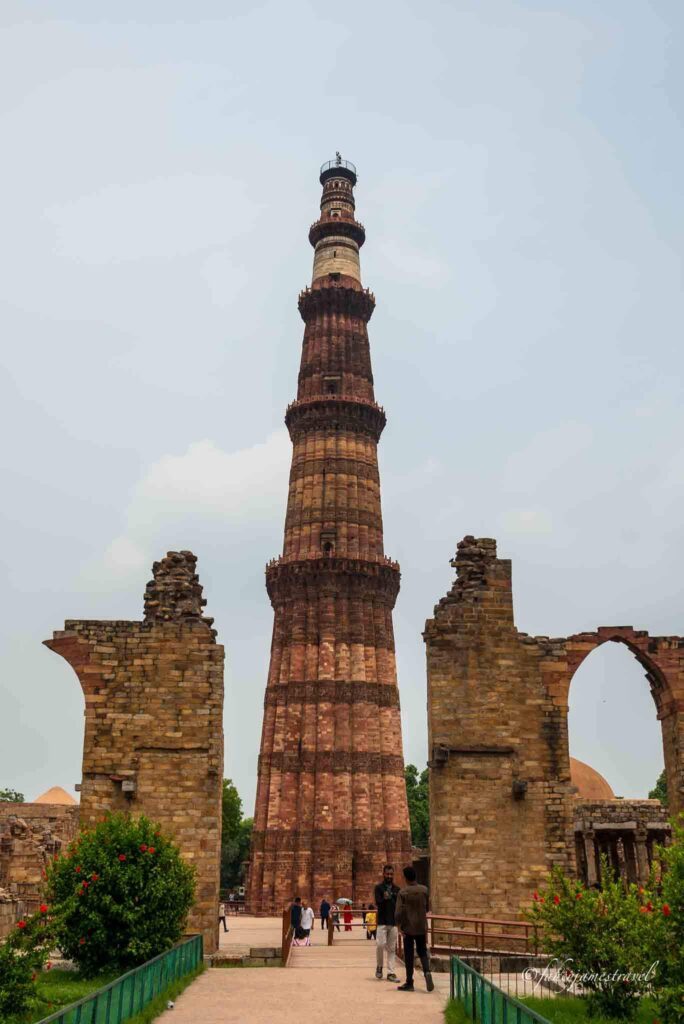
As with typical Indo-Islamic/Sultanate-era architecture, red sandstone and marble are the basis of its construction. It peaks at 73 metres, making it the largest brick minaret on the planet.
Construction began in the 13th century by Qutub-ud-din-Aibak, the first Muslim ruler of Delhi, and was completed by his successor, Iltutmish (other monuments in the Qutub Minar include the Tomb of Iltutmish and Alai Darwaza).
The minaret has five stories, but since 1981, you cannot climb up because of safety issues.
When I was standing at the base of the minaret looking up, I got dizzy from its size. Thick and tall, it’s no wonder it’s one of the best places to visit in Delhi. The Iron Pillar found beside the Quwwatul Islam Masjid is one of the interesting parts of the attraction.
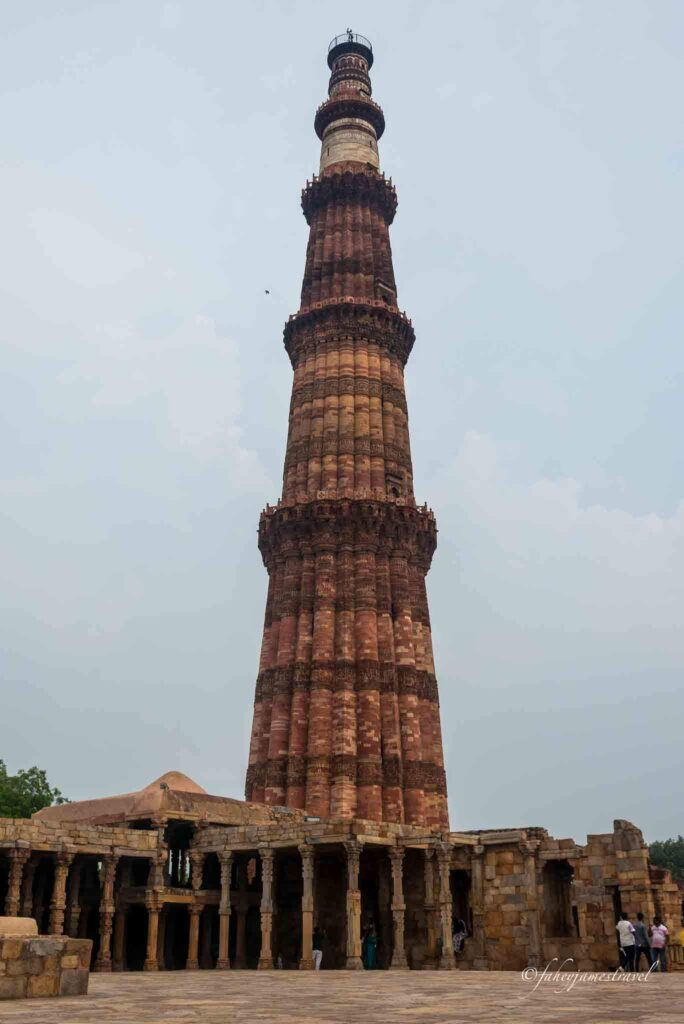
Actually, the pillar has a Sanskrit inscription dating back to the 4th century, which was unusual for this time. It is said the 7-metre pillar has not deteriorated since its 1600-year existence, which highlights the skill and know-how of historic Indian engineers.
Another site I particularly found interesting was Imam Zamin’s Tomb.
A saint from Turkestan who settled in India around 1500, Imam Zamin, built his own tomb before his death. The exterior of the tomb was strikingly beautiful. It has a white and red sandstone design, so beautiful and impressive, as was the entire complex.
When we visited, however, we were disappointed with the staff on site.
One of the official security officers working there greeted us with a handshake and asked where we came from. It was pleasant at the beginning. He started to talk about the history of the site, but I knew what was coming from experience.
After a brief chat, he started asking for money as if he were a guide. This is common throughout India. Annoyed, we kindly refused to pay him. There are two public toilets on-site, too.
Be aware that this happens a lot.
- Opening Times: 07.00 AM – 05.00 PM
- Recommended Time: 1-2 hours
- Cost: 550 Rupees ($5.76/€5.04/£4.31) per person
- Address: Seth Sarai, Mehrauli, New Delhi, Delhi 110030, India
Evening – Akshardham
Akshardham, also known as the eternal abode, is a gargantuan temple located in Delhi and one you must add to your list for sightseeing.
Wonderful gardens, exhibitions and water shows offer people a chance to experience a lot. You must leave your camera, phone and bag in the cloakroom before you enter the complex.
That’s why I sadly couldn’t get any photos of this wonderful place.
Check out the video below, which shows you what it’s all about.

The complex is 100 acres and exhibits all the good about Indian art and architecture, as well as being a tribute to Bhagwan Swaminarayan.
It is part of the Vaishnav tradition in Hinduism and stands for purity.
We paid 260 Rupees ($2.72/€2.38/£2.04), which gave us access to:
- Shahajanad Darshan – Hall Of Values; robots talking and performing cultural and historic events relating to Bhagwan Swaminarayan. 55 minutes long.
- Neelkant Darshan – A Movie on a giant screen about Bhagwan Swaminarayan’s life and journey across the Indian subcontinent. 45 minutes long.
- Sanskruti Darshan – A cultural boat ride takes you through India’s history century by century. In ten minutes or so, you will appreciate what India has done for this world.
There is a huge canteen area where you can get Indian food for reasonable prices.
When we visited, I was particularly moved by the Neelkant Darshan movie. Hundreds of people packed into the beautiful theatre, where powerful sound and stunning visuals created an immersive experience.
The cultural boat ride offered a brilliant crash course into India’s deep and colourful past. When I return to India’s capital, this will be at the top of my Delhi itinerary.
Note: If we visit again, we’ll go in the evening to catch the light and water show at 07.30 PM. It’s renowned as one of Delhi’s best nighttime attractions. The metro is the best option here, costing around 40 Rupees ($0.42/€0.37/£0.31), and it avoids Delhi’s evening traffic entirely, which matters if you want to make the 07.30 PM water show. You’ll sit beside the stepwell as the sun sets for a mesmerising 25-minute performance.
The show features dazzling colored lights, video projections, and water jets that create a magical spectacle.
- Opening Times: 10.00 AM – 06.30 PM
- Recommended Time: 1-2 hours
- Cost: Free entry, but the exhibition fee varies
- Address: J77G+3W New Delhi, Delhi, India
Where To Stay In Delhi?
Delhi is a big city, and choosing where to stay is important.
When we stayed in Delhi, we booked into Moustache Delhi. This was located in New Friends Colony in South Delhi. The best part was that it felt extremely safe. There was a gate for the entrance area, which felt reassuring, as well as a security guard at the gate at night.
We paid 2,736 Rupees per night ($28.64/€25.09/£21.43).
The room was very spacious, and the beds were comfy with loads of room to put out our bags and lay out our belongings. There was a shared kitchen where people could purchase meals for as little as 218 Rupees ($2.28/€2.00/£1.71) per meal.
The food was made by locals who were actually living there. The atmosphere was lively. People worked and visited the city, and at night everyone sat around and chatted, played games, and even did karaoke.
I would highly recommend you stay in New Friends Colony and Moustache Delhi.
Where To Eat In Delhi?
My favourite restaurant in Delhi was Nathus Sweets.
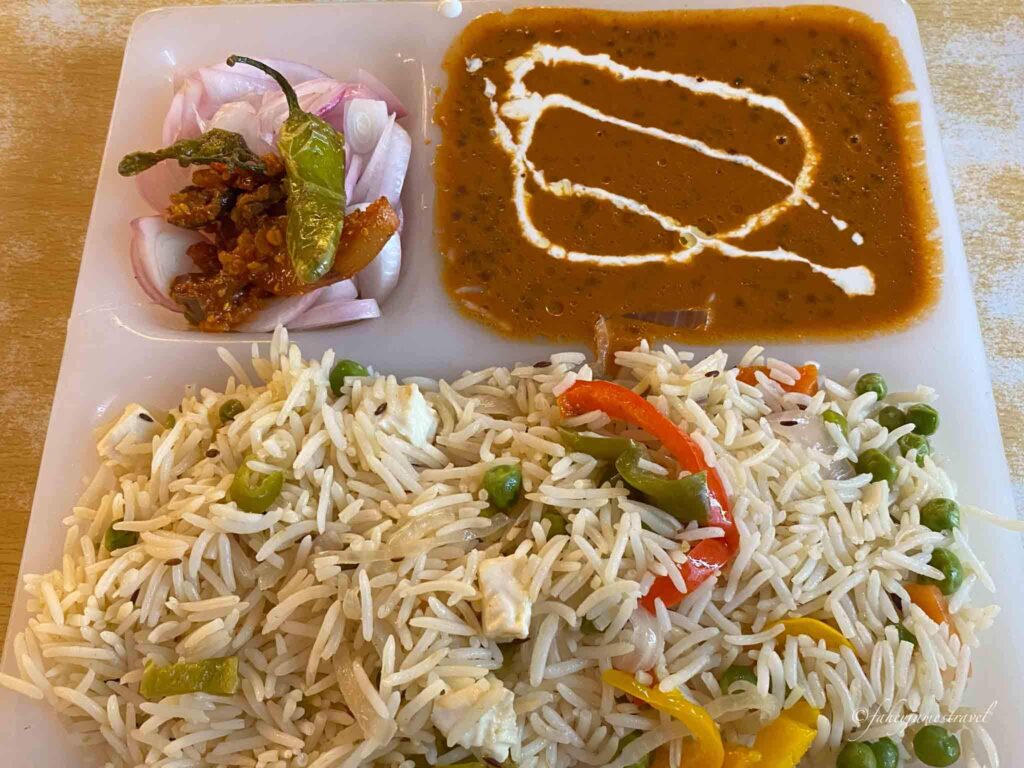
The food was so tasty that we returned multiple times.
They offer delicious main courses followed by wonderful options for sweet treats for dessert. The staff provided excellent, friendly service too. I got the Dal Tarka, which cost 220 Rupees ($2.30/€2.02/£1.72).
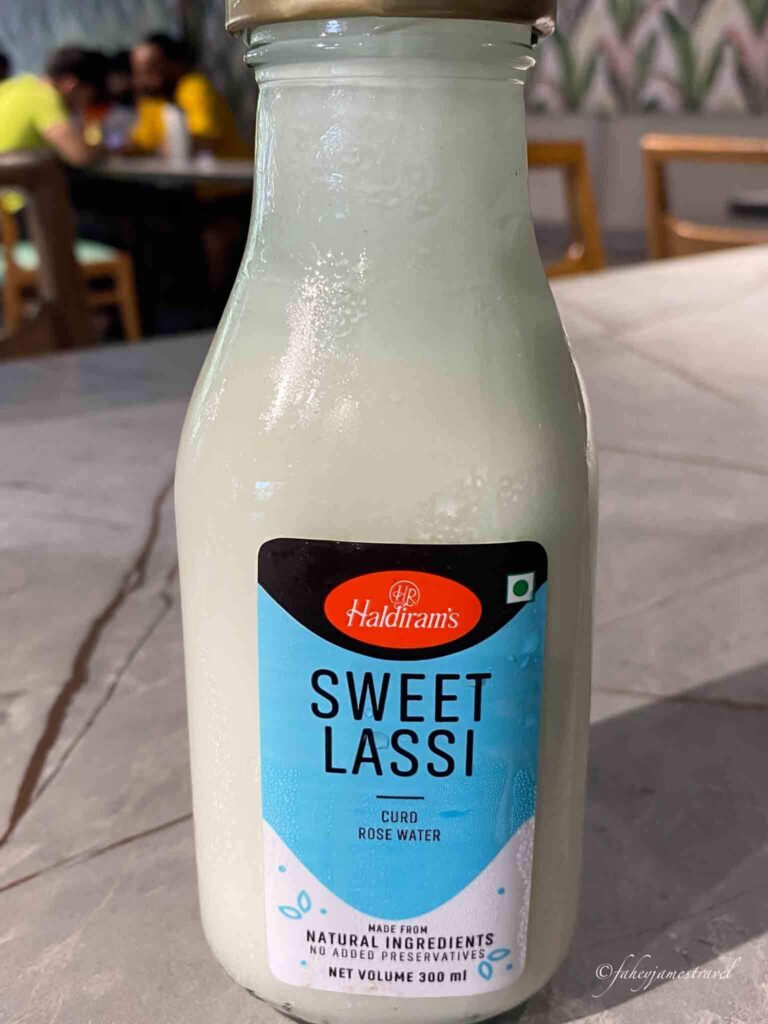
Another great option I loved was a chain called Haldiram’s. They serve the best coffee milkshake and sweet lassi in small glasses. I recommend you try it.
Thankfully, they have locations all over Delhi and are perfect for breakfast, lunch, or dinner.
At Connaught Place, we ate at Teddy Boy Gastro Bar.
We went downstairs, and although it was almost empty, the food was very tasty.
The food here was my favourite I had in Delhi.
Should I Visit Delhi For 3 Days?
Yes, 3 days in Delhi is enough for a first-time visitor.
I have to admit that Delhi and especially Rajasthan are wonderful from my experience.
Other regions like Uttar Pradesh, Ladakh and Uttarakhand look magical too. If you have more days, you can see some brilliant places in Rajasthan and escape the busy city of Delhi.
There’s so much more to see, learn, and eat in this sprawling city.
Check this India packing list before you make the trip!
Thanks for reading,
James
FAQs
Is 3 Days In Delhi Enough?
In 3 days in Delhi, you can cover most of the best attractions. Many of the top sights are conveniently located close to each other, making it possible to see Delhi’s highlights in just 3 days. I would say you can even add in a couple of additional places if you follow a timetable and are smart when moving through the city.
What Should I Not Miss In Delhi?
For me, four stops stood out on this itinerary: India Gate, Akshardham, the Lotus Temple, and Qutub Minar. At India Gate, watching the light change into evening was the moment that stuck with me most. At Qutub Minar, standing beside the Iron Pillar, a 1600-year-old structure that still hasn’t rusted, was genuinely humbling. Akshardham and the Lotus Temple round out the list for their architecture and atmosphere. It’ll depend on your own interests, but these four were the ones I’d tell a first-time visitor not to skip.
Which Month Is Best To Visit Delhi?
The best time to visit Delhi is October, February, or March, when temperatures sit around 15 to 25°C (59 to 77°F), and the air is clearer. November through January technically stays cool too, but smog builds up badly during those months, so it’s worth avoiding if you can. I visited in July and found the heat genuinely draining, constantly ducking in and out of air conditioning just to cope, so if I return, I’ll make a point of going in one of those cooler, clearer months instead.
- Angkor Botanical Garden: Is Siem Reap’s Free Garden Worth It?
- Tomb Raider Temple (Ta Prohm): My Honest Guide From Angkor
- Things To Do In Cambodia (2026): My Honest Guide After Visiting
- My Two Weeks In Cambodia Itinerary (From Someone Who Spent Nearly A Month There)
- How To Visit Angkor Wat In 2026


You’ve included a great variety of interesting activities in this itinerary. I really enjoyed reading about the history (of which I am woefully and shamefully ignorant). The architecture is simply breathtaking. I’m not a fan of the crowds, heat, and chaos but the excursions you describe are very tempting.
Lyn | http://www.ramblynjazz.com
This is a very well researched and laid out plan of what to do in Delhi in 3 days. I have wondered how long I should stay there, due to the plethora of places to see and the spread out nature of their locations. It is a post that I certainly will bookmark for info when I get there.
Interesting to hear about the hotel scams, and thanks for the warnings and what to look for. I’ve heard of these but luckily have never been caught up in one.
Let’s start of by saying namaste from Bharat otherwise known as India. This country fascinates me like a book with lots of written poetry in its pages. I would love to see Delhi one day but I have to prepare myself for that as a female traveler and someone who have an aversion to crowd, chaos and disorganization. To know Delhi’s history is like discovering something that shimmers and smells like a tantric insence. Love the photos James and how you capture the cities glorious architecture. Thanks for sharing this post with us #flyingbaguette
Jan – https://flyingbaguette.com/
I can’t wait to visit Delhi even with all the chaos and crowds (which I know will overwhelm me haha) it’s really great to know about the scams – that way we can try to prevent them. I’d love to see the lotus temple. It’s such a unique design!! Definitely saving for later!
It’s been many, many years since we visited Delhi and it looks as though things have changed so much in the intervening time. Your very detailed post has prompted us to think that we really should revisit. We saw some of sights you mentioned but missed many more. Loved the Lotus Temple and Akshardham -the architecture is just lovely. Great post!
Nice one again James, I really enjoyed this informative three day itinerary for Delhi. It has a good balance of sightseeing, but also shopping and hotel information included. Thanks for the heads up about the hotel scamming on booking.com. Also enjoyed your honesty about the constant photo opportunities. Do you know why the locals are so keen? Like Lyn, I would struggle a bit with the chaos of Delhi, I guess you embrace it and get used to it? How was this experience for you?
Carolin | Solo Travel Story
Thanks for the comment Carolin!
I think it could be for a number of reasons. I asked one of the staff members in a hotel why people wanted pictures so much (he was Indian) and he said because of the colour of our skin. Others suggested that simply because we were tourists. What I loved about India was the people. Literally the most open and friendly I can remember meeting. Countless times were were invited to dinner in strangers homes and to this day we still get video calls and messages from people who we met in the street!
I do think some people could find parts of India overwhelming but I believe for the most part people act is in good faith.
Have you been before or would you consider in the future?
A trip to India is high on my list and you’re right, it does seem overwhelming, so this guide is ridiculously helpful. The photos with people is interesting, haven’t seen that since I lived in China and everyone wants photos of you. It can be exhausting but also a great way to meet people. You just have to know when to cut it off. The Red Fort would be my top choice to visit, it looks so impressive. Thanks for the great guide to Delhi
I love that the metro has air conditioning, that’s a good detail to know. I’d like to take rickshaws sometimes but in the heat, it’s got to make the metro so much more comfortable. I imagine it’s busy! Fun that you got to see your favourite bookstagrammer, too. What’d you eat at McDonald’s, since I don’t think they have beef? Great overview of things to see and do 🙂
So many memories came back to me when I read this article!
Delhi is not an easy city, but it’s well worth a visit. When I visited India, I entered the country through the capital and it was, without a doubt, a head-on collision with the reality that I was going to experience for the next few weeks.
Delhi is an extraordinary city, with rich heritage to explore, and an organized chaos that initially makes you dizzy 🙂