Rukhobod Mausoleum Samarkand: Worth The Detour Or Skip It?
My Guide To Rukhobod Mausoleum
Rukhobod Mausoleum sits barely 500 metres from Samarkand’s grandest tombs, and I’ll be honest, I nearly skipped it.
Yes, but I’m glad I didn’t.
It’s small. Modest. Nothing like the blue domes plastered across every Uzbekistan Pinterest board. You could walk right past the entrance and not think twice.
Twenty minutes inside was plenty. That’s the whole visit. It’s not big, and it won’t take your breath away the way Registan Square does, so if you’re tight on time in Samarkand, I understand the instinct to cut it.
But there’s a moment worth having.
I sat on one of the back benches around five in the evening, and the sun cut straight through the doorway and lit up the graves in front of me like a scene out of a film. I wasn’t expecting that from a building this plain.
Inside lies Sheikh Burhan al-Din Sagarji, the Islamic theologian Tamerlane respected so much that he’d dismount his horse rather than ride past. His wife and nine children are buried alongside him. He was originally from a town called Sagarj.
I spent close to a month moving through Tashkent, Samarkand, Bukhara and Khiva, and this quiet little stop ended up sticking with me longer than the famous ones.
If you’re a solo traveller or a couple deciding whether Rukhobod earns a spot on a packed Samarkand itinerary, here’s what it’s actually like, how to get there, and who’s buried inside.
Disclosure: Some of the links on this page are affiliate links, which means that if you make a booking through them, I may earn a commission at no additional cost to you. See my Privacy Policy
My Top Hotel Picks In Samarkand
🏨 DiliMah Premium Luxury – Check Prices Here

Who Was Sheikh Burhan al-Din Sagarji?
If you haven’t heard of Sheikh Burhan al-Din Sagarji, then we had something in common, at least before I visited.
This guy was a prominent figure in Samarkand during Tamerlane’s reign. He converted many people during his time in what is today’s Xinjiang.

He did however, die while in China, but he held Samarkand close to his heart and left instructions in his will that he be buried there. His son Abu Said carried his remains back to the city to fulfil that wish.
Tamerlane respected Sagarji so much that he never passed his grave on horseback. Instead, he would get off his horse and walk in his honour.
Therefore, today we have Rukhobod Mausoleum.
A member of the Dervish community, Sagarji abstained from a life of luxury. Instead, he embraced the humble existence of a pilgrim, yet Tamerlane held him in the highest regard.

An interesting part of the story states that Sagarji held a box made from copper which enclosed seven hairs belonging to the Prophet Muhammad.
When construction began on his mausoleum, it is said that this box was buried with the blocks somewhere in the dome.
What Is Rukhobod Mausoleum Like?
Don’t expect any grandeur.
Rukhobod Mausoleum does not display any form of luxury or wealth. Its simple and elegant design looks basic in comparison to Timur’s mausoleum or Aksaray Mausoleum, which sparkles like diamonds. The name actually translates to something along the lines of “resident spirit” or “abode of spirit.”
Inside, there are several graves which are enclosed.
There is beautiful woodwork too. The doors look like they have seen better days, but I loved them for the character which they earned with time.
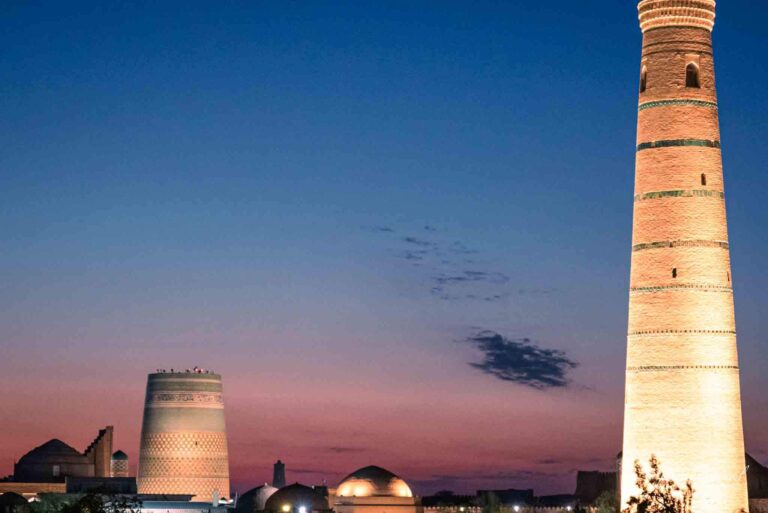
If you sit directly at the back opposite the main entrance, you can see the Rukhobod Madrasa and minaret, which look impressive through the door frame.

The roof interior is simple yet elegant.
It features a white background with a brown octagonal pattern that gracefully fades away about halfway up from the door.
There are a couple of benches at the back where you can sit in peace and watch the sunlight burst through onto the graves.
There is a green donation box that visitors can contribute to if they wish. It measures 24 by 24 metres and is 24 metres high. When I walked past it, I was surprised by how big it actually was.
You won’t spend much time in the mausoleum, especially if you have more places to visit, which no doubt you will.
It is a small square shape with a dome on top and has three entrances in total.

Overall, Rukhobod Mausoleum offers a refreshing contrast to the ubiquitous blue minarets, mosques, and architecture found throughout Central Asia, though these are undoubtedly beautiful in their own right.
Who Is Buried At Rukhobod Mausoleum?
Within the mausoleum, you will find the graves of Sheikh Burhan al-Din Sagarji, his wife and nine children.
It was last restorated in 2016 at the beginning of the year.

Rukhobod Mausoleum Map
How To Get There
I recommend getting a Yandex taxi to the mausoleum.
It is more reasonably priced than a regular taxi.
Once you have spent time exploring Rukhobod Mausoleum, you can enter Amir Temur’s mausoleum, visit Amir Temur Park and walk to Amir Temur Monument or enter Aksaray Mausoleum. Thankfully, they are all very close to one another in the heart of Samarkand.
You can alternatively get a bus to Markaziy Bog, Gum, or Shahar Hokimiyati.
Opening Hours
Rukhobod Mausoleum is open from 08.00 AM – 07.00 PM daily.
Entry Fee
There is no charge to enter the mausoleum, but you can make a donation.
Other Attractions Close To Rukhobod Mausoleum
Other places of interest that you should visit while in Samarkand include:
- Shah-i-Zinda
- Presidents Tomb
- Afrosiyob Settlement and Museum
- Bibi-Khanym Mosque
- Siyob Bazaar
Final Thoughts On Rukhobod Mausoleum
Rukhobod Mausoleum is an interesting place to visit whilst in Samarkand, though I’ll be honest with you, it won’t take your breath away like Registan Square or leave you awestruck like Timur’s mausoleum does.
I spent about 20 minutes inside, which gave me plenty of time to absorb the peaceful atmosphere and photograph the simple tombs and beautiful old wooden doors.
I visited around 05.00 PM, which I’d highly recommend. Only three other visitors were there, making it wonderfully quiet for reflection and photography. You can take photos freely inside without restrictions, though be aware the site isn’t wheelchair accessible from what I observed.
If you’re stretched for time in Samarkand and must prioritise, Timur’s mausoleum is more impressive and you could technically skip Rukhobod. However, I wouldn’t recommend doing that.
Since it’s literally a 500-metre walk from Gur-e-Amir, you can easily visit both together along with the Amir Temur Monument, the minaret, the ancient spring and the cascade of fountains. This creates a lovely walking circuit through this historic area.
Would I visit again? Absolutely, especially if I were showing someone around Samarkand for their first time. Sometimes the quieter, simpler sites reveal just as much about a city’s soul as its most famous attractions.
If you enjoyed this article then you will love my post about the top 11 things to do in Samarkand.
Thanks for reading,
James
- Angkor Wat Sunrise Guide: What I Wish I’d Known Before The 03.30 AM Alarm
- Angkor Botanical Garden: Is Siem Reap’s Free Garden Worth It?
- Tomb Raider Temple (Ta Prohm): My Honest Guide From Angkor
- Things To Do In Cambodia (2026): My Honest Guide After Visiting
- My Two Weeks In Cambodia Itinerary (From Someone Who Spent Nearly A Month There)