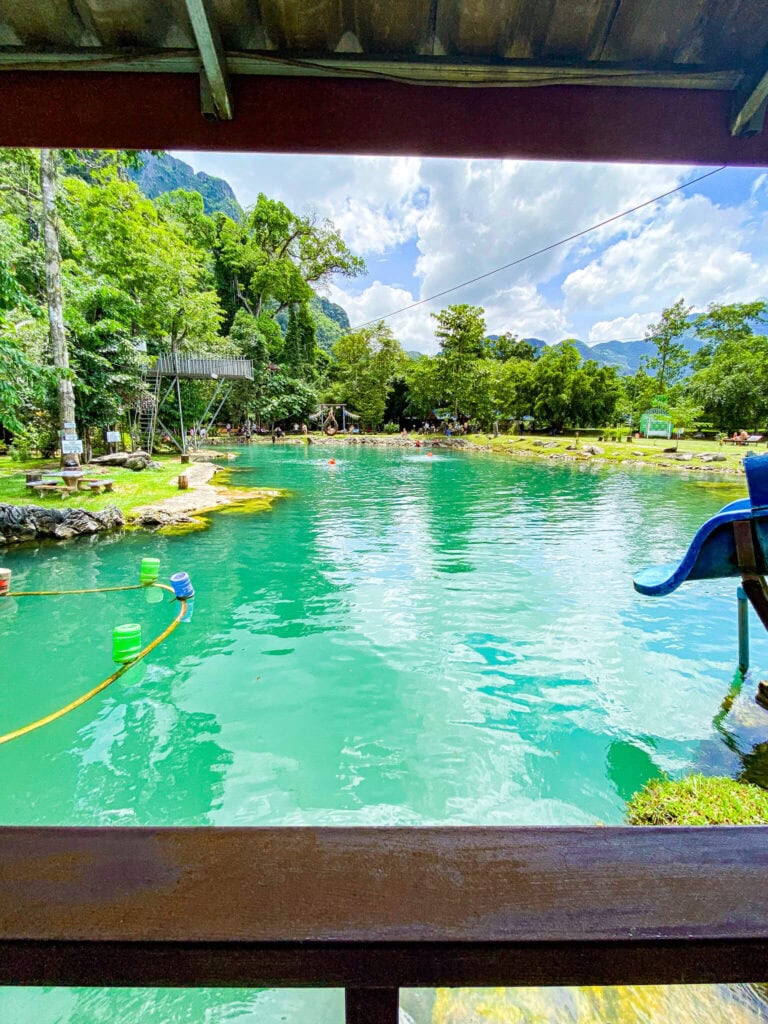
17 Things To Do In Sapa Town And Beyond
AMAZING Things To Do And See In Sapa
Are you looking for some things to do in Sapa town and beyond? There are genuinely loads to explore.
Sapa town itself is charming but small. You can wander through the main streets, peek into local markets, and grab a decent bowl of pho in about half a day. The real magic happens when you venture beyond the town centre into the surrounding rice terraces and traditional villages. That’s where Sapa transforms from a pleasant mountain stop into something genuinely unforgettable.
I spent five days exploring this region, and honestly, Ioved every second. Cat Cat Village was amazing, with its massive waterfalls and Black H’mong families weaving indigo-dyed textiles on their doorsteps.
Ta Van village was equally incredible, tucked between emerald terraces that shifted colour with every change in light.
Here’s the thing: solo travellers and couples always ask me: should you actually stay in Sapa town, or book accommodation in Cat Cat Village or one of the smaller villages instead?
The town offers convenience, WiFi that actually works, and restaurants serving Western breakfasts when you’re craving familiar comfort. The villages offer authenticity. Homestays where your host shares rice wine at dinner, mornings where roosters replace alarm clocks, and zero light pollution for proper stargazing.
I chose to base myself between the town and Cat Cat Village and trek out daily, which worked brilliantly.
This guide covers the activities, villages, and viewpoints that deserve your limited time, plus the practical bits like where to stay and how to navigate the trekking options without getting overwhelmed.
Read my 2 Week Vietnam Itinerary and my 7 Day Vietnam Itinerary for Vietnam travel inspiration.
Disclosure: Some of the links on this page are affiliate links, which means that if you make a booking through them, I may earn a commission. See my Privacy Policy.
Sapa Square
Sapa Square is a large area where kids can be found playing football, and there’s a lovely atmosphere.
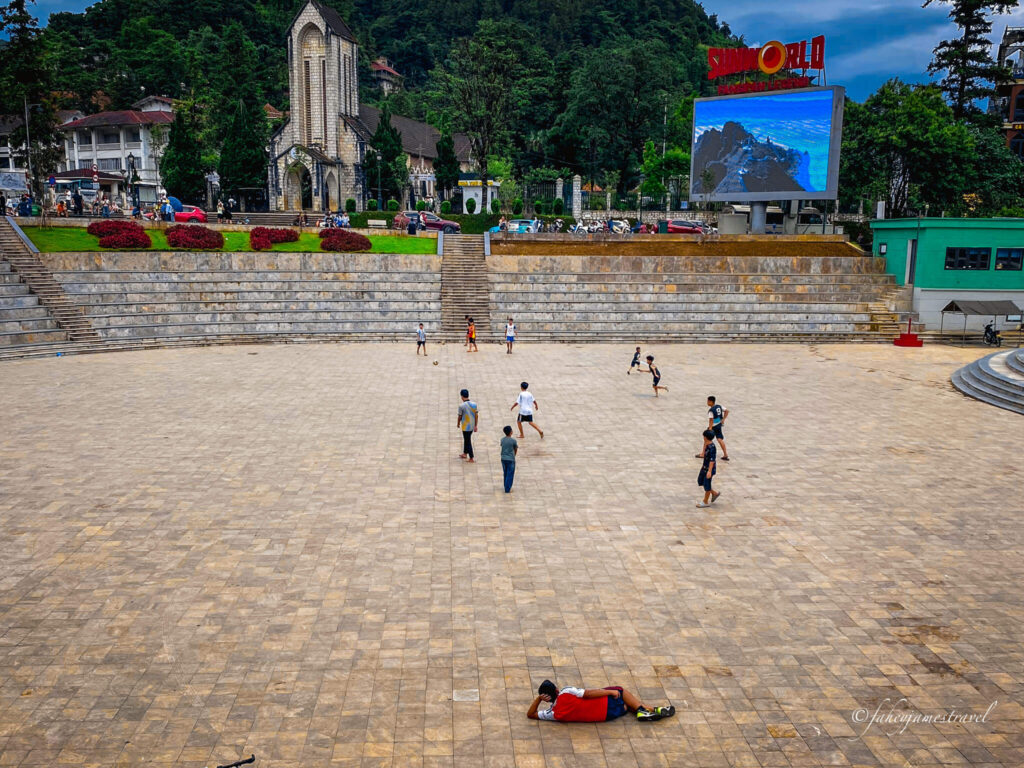
Every time I walked past, something was happening.
People love this area; it really is the heart of the town. You’ll find plenty of places to eat nearby, plus the church, Sapa Station, the culture museum, and love market are all close by and worth exploring.
At night, the atmosphere becomes much more lively. The lights from Sapa Station and other eateries transform it into something more energetic.

You’ll notice the photographers at the edge of the square close to Sapa Station, where many people pose for Instagram shots.
If that’s your thing, go for it.
If not, you can still soak in the good vibes and relish the atmosphere.
Read My 10 Day Vietnam Itinerary For More Tips And Places To Explore
Sapa Station
The first images of Sapa brought me to Sapa Station.

It’s iconic, with an incredible exterior to the railway station. Outside, I always saw people posing for pictures.
While I didn’t travel by train to Sapa Station (it goes to the Cable Car Station to Fansipan), I entered inside just to see, and inside there’s a shopping mall that’s elegant and modern in design, which is great.
Grab a coffee at the famous Highlands Coffee there.
Make it part of your Sapa town itinerary and get some nice shots outside.
Read My In-Depth 5 Day Vietnam Itinerary To Plan Your Trip
Sa Pa Stone Church
Sapa Church is a beautiful stone church located beside Sapa Square.

The first time I tried to get in, it was closed, but on my second visit, it was open for a ceremony.
You can admire it and take some photos, but photography isn’t welcome inside. It’s a beautiful church found right in the centre of Sapa town.
Below you can see the times of mass.
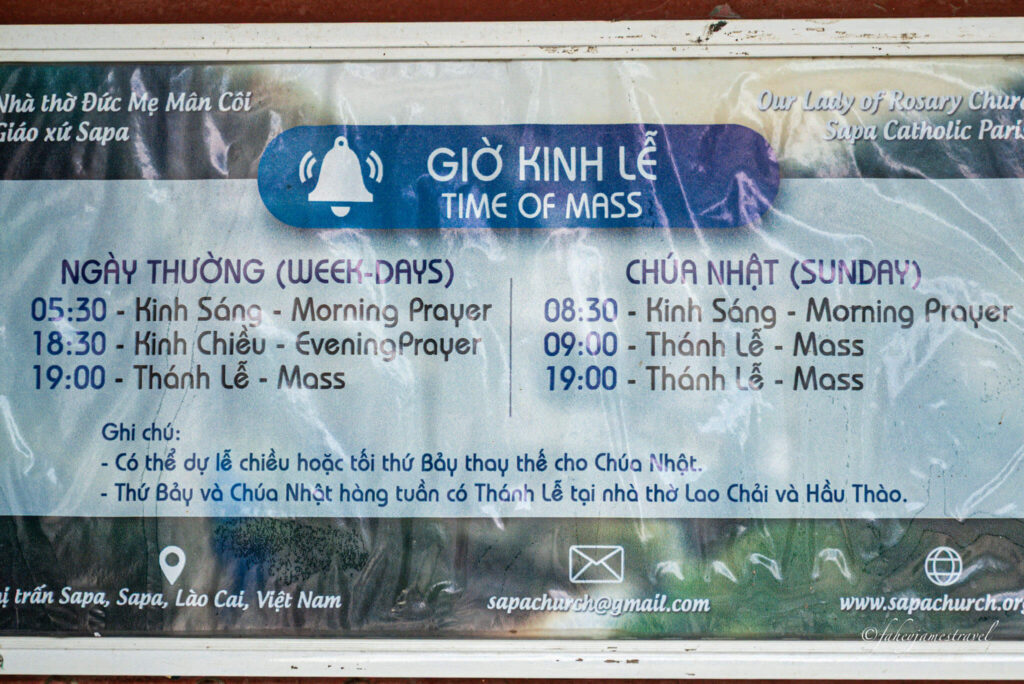
This can be a quick stop, so it won’t take much time depending on how much you have to spend.
Find The Differences Between Thailand Vs Vietnam With My Guide
Sapa Lake
Walking around Sapa Lake is a lovely way to stay active.
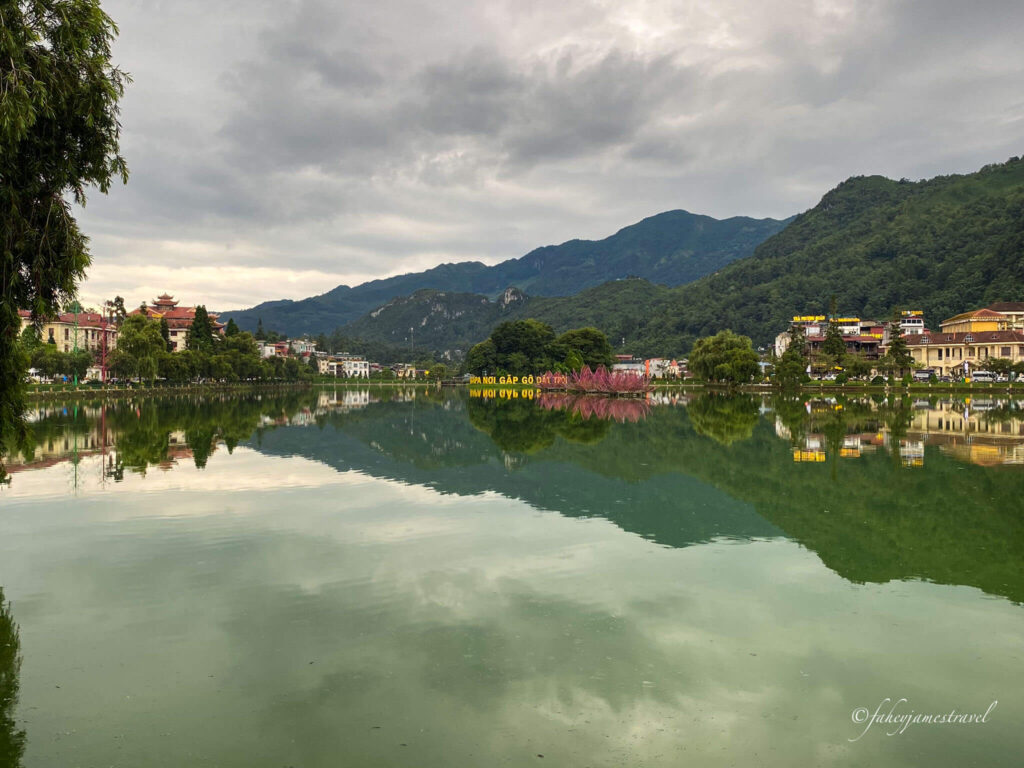
When the sky is clear, and you reach the east side of the lake, you can see the mountain towering above the hotels in the distance. It’s really special to see.
There’s a nice garden area with well-maintained flowers and bushes beside Sapa Lake Square.
It doesn’t take too long to walk the entire perimeter.
But I recommend getting some ice cream at MIXUE right beside the lake afterwards to cool down.

It’s a peaceful and relaxed thing to do when you need some walking.
Sapa Love Market
Across from Sapa Square is Sapa Love Market.

The best thing to do here is stroll around and see what’s happening. Depending on the time of year, it may be open or closed. It’s usually open every Saturday evening from 6:00 pm to 7:00 pm.
Locals come here to buy and sell, and there can be cultural live performances too.
While I missed it on my trip, I know many people are interested in attending.
Sapa Culture Museum
In Sapa town, you can explore the region’s history at the Sapa Culture Museum.

When I visited, it was literally only me. I wonder if people realise it’s there, it’s kind of hidden behind the Sapa Love Market.
Inside, you’ll find displays about the local H’mong women, the region’s history and culture. It was a quick visit but nonetheless enjoyable.
Additionally, it’s free to enter.
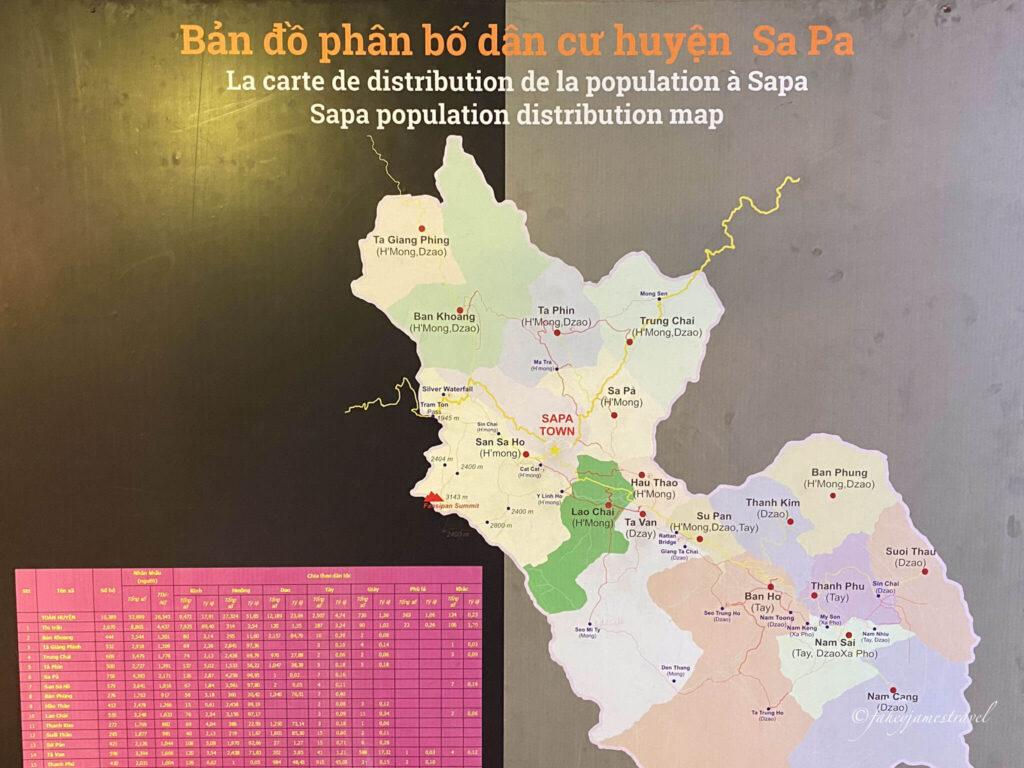
Maps from the past, jewellery, clothing, and the building seem to be made from wood. Pick up a souvenir from the museum shop too if you like.
I spent about one hour inside, but you could be quicker if you’re short on time.
Take A Coffee With A View
One of the best things to do in Sapa for me was sitting at one of the coffee shops on the edge of Sapa town with stunning views.
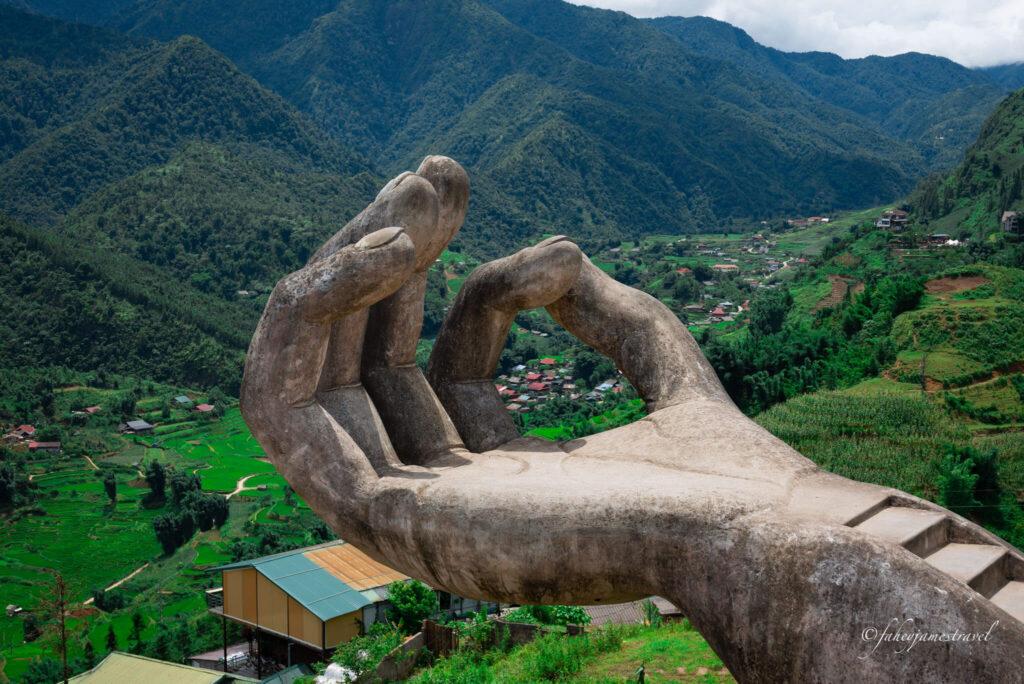
I always say Moana Sapa had some of the best views and excellent tea and coffee. It’s located close to the town, and you could walk there, but I recommend taking a motorbike.
The cost to enter is 90,000 Vietnamese dong, which includes a drink, ginger tea or coffee. I opted for the tea, which was great! Here I found another gate to heaven, a giant hand statue to walk onto for photos.
Don’t miss the piano display for more excellent photos.

Pro tip: Climb the staircase in the tree for an elevated view of Moana Sapa and the rice fields below.
Another great place for a coffee with a view is Quán Gió SAPA.
Moana Sapa is a wonderful thing to do in Sapa.
Cat Cat Village
Cat Cat Village is one of Sapa’s best things to do and most popular attractions.

It’s not so easy to get there; it requires trekking down Sapa’s hills and winding roads, but you can take a buggy all the way down from the ticket entrance.
If you want to enjoy the views, feel free to walk.

I paid 150,000 Vietnamese dong to enter the village, which is open from 06.00 AM until 09.00 PM.
Once down in the village, it feels closed off from the world. Loads of young women come here in colourful ethnic clothes and take photos. They use the horses, waterfalls, and bridges to make the best shots they can.

When I visited, the best highlight was the musical performance, which took place in front of a packed audience.
Don’t miss the hydro museum, muddy house, and the beautiful horses. However, the sun was out all day, and it was hot, so I was worried about the horses.
I recommend you eat at Hoa Của Núi Restaurant & Coffee overlooking the village.
Ô Quý Hồ Pass
Driving around the Ô Quý Hồ Pass was riveting.

Forget the skies along the way, many will be impressed with the bending roads and green trees covering the mountains.
However, when I was in Sapa, I booked this Sapa Private Car Tour to see the Glass Bridge, Lonely Tree, Love Waterfall, Silver Waterfall, and Heaven Gate, all worth seeing, even for a short time.

We stopped and explored along the way, and my driver came with me into each site and told me all about each one. The service was excellent, and the sites made me think Sapa was the most extraordinary place in all of Vietnam.
Driving along the Ô Quý Hồ Pass is one of the best things to do in Sapa for sure
Silver Waterfall
Silver Waterfall is a large waterfall close to Sapa and one of the best things to do in the region.

It costs 20,000 Vietnamese dong to enter, and it’s a tough climb up the green staircase.

When I visited, I found a couple of H’mong women selling souvenirs. Standing right below the waterfall, the water is loud and powerful.
There was a small group of Australian tourists when I was here, and that was it. It felt like people didn’t want to come here compared to other sites.
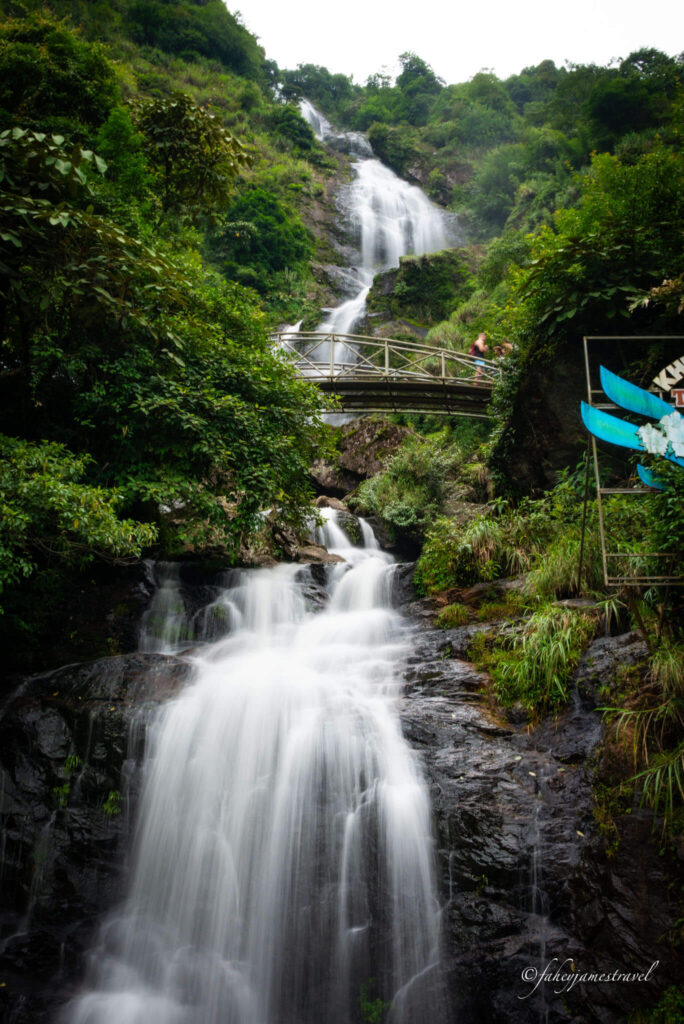
It’s easily accessible from the road, and my driver parked right at the gate.
It’s a real look at why nature in Vietnam is unmatched.
Love Waterfall
Love Waterfall is a beautiful place to visit in Sapa.
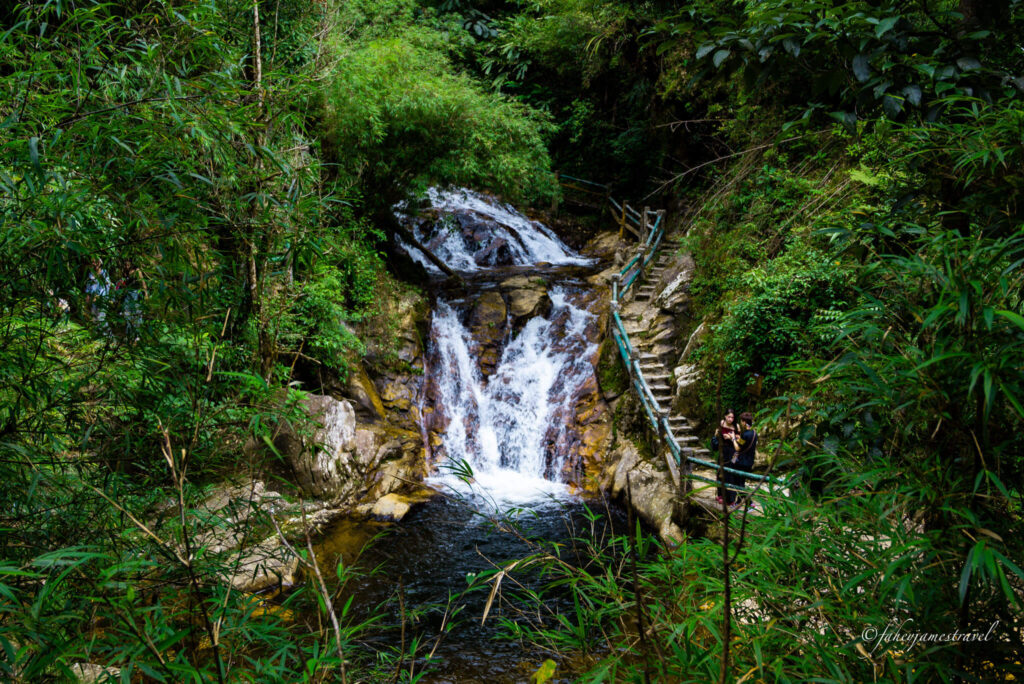
It’s harder to reach than Silver Waterfall. You need to walk through the jungle and fields to get there, meeting buffalo and other wildlife along the way. In total, it’s about 2 kilometres.
It reminded me of Bali’s tall and narrow waterfalls.
Entry costs 20,000 Vietnamese dong, but I would have paid five times that; it was so unique and magical when I got there.

Make sure to bring good footwear here. Trail shoes with good grip and waterproofing will be ideal.
Don’t skip Love Waterfall because it’s a great place to see.
Sapa Heaven Gate
Shortly after finishing at the lovely tree, we drove to Heaven Gate.

It’s magical again, perched up high overlooking the valleys of the Ô Quý Hồ Pass. When there’s a little cloud, it looks as scenic as you’ll find.
Entry cost me 120,000 Vietnamese dong, and I skipped the fairy village underneath because it looked more suited to children and families.

On top, there are interesting statues that are colourful, as well as the key feature being the giant golden statue with multiple heads, the small temple, and the gate itself.
If you’re hungry or thirsty, you can eat at Hoàng Liên Restaurant & Cafe located on-site.
The Lonely Tree of Ô Quý Hồ Pass
This incredible scenic site is found along the Ô Quý Hồ Pass.

It’s an isolated tree sitting out with the best view in Sapa. The mountains and roads are visible in the background, which makes it a perfect photo opportunity. When I visited, it was a little cloudy, but nothing to ruin the view.
I could see the glass bridge in the far distance; it’s only a couple of kilometres away. This part of Sapa is truly some of the best nature I’ve seen.

Entry cost me 20,000 Vietnamese dong. A few ladies were taking photos when I visited, and a family full of questions even joined me for some selfies.
It’s a nice and relaxing place to explore in Sapa.
Rong May Glass Bridge
I wasn’t sure what I was getting myself into, but it was incredible.

Located about 30 minutes’ drive from Sapa town, Rong May Glass Bridge is magical. Take a shared minivan to the elevator and up you go to the cliff with astonishing views of the landscape.
Entry costs 500,000 Vietnamese dong to reach the very top. I was able to fly my drone all around the bridge, and it’s so impressive.

Also, I recommend booking this tour, which is the one I got: Sapa Private Car Tour to Silver & Love Waterfalls and Lonely Tree.
My driver was knowledgeable and told me all about the key sites and their history. It was opened only back in 2019 and is Vietnam’s tallest bridge.
Visiting the Ô Quý Hồ pass was a special experience.
Ta Van
Quite literally my favourite place in Vietnam.

Those postcard or screensaver images you see will likely originate in Ta Van.
This small village was recently named one of Asia’s most scenic hilltop retreats. When I visited, I even saw someone paragliding in and landing in the fields in front, which was unique.
Sapa May Homestay gave me an amazing bungalow elevated off the ground and overlooking the rice terraces and mountains. I couldn’t have picked a better room.

My guide brought me on trail tours where local H’mong women would pop up. Whilst yes, they were looking for me to buy something (I got an incredible pillow case made by local H’mong women), they can be a little pressuring. B
It’s best to tell them you don’t want anything rather than have them follow you along the trail. This does happen.
Do not skip Ta Van.
Lao Chai
Lao Chai is a mountainous region close to Sapa and totally worth visiting.

I visited during my Sapa 2-day trekking experience and fell in love with nature. Rice terraces that seem to never end, waterfalls that fed the valleys and kept them green, and amazing homestays to choose from.
In the wet season, be cautious as mudslides do happen here. But when you go with a guided tour that speaks English, they’ll explain where to go and what to avoid, so it’s much safer.

I recommend visiting Ly Stream Lao Chai for amazing views right along the river, with the bridge to the right as you look out, with mountains in the backdrop. The hot chocolate here was incredible!
I did try to walk to Quoc Waterfall, one of the best things to do in Lao Chai, but it was so hot, and I was starting to get exhausted from the trek that I didn’t have the energy to finish it. Be aware that heat exhaustion is a real thing.
Lao Chai was a real escape, even from the small town of Sapa.
Fansipan
Visiting Fansipan is one of the most popular things to do in Sapa.
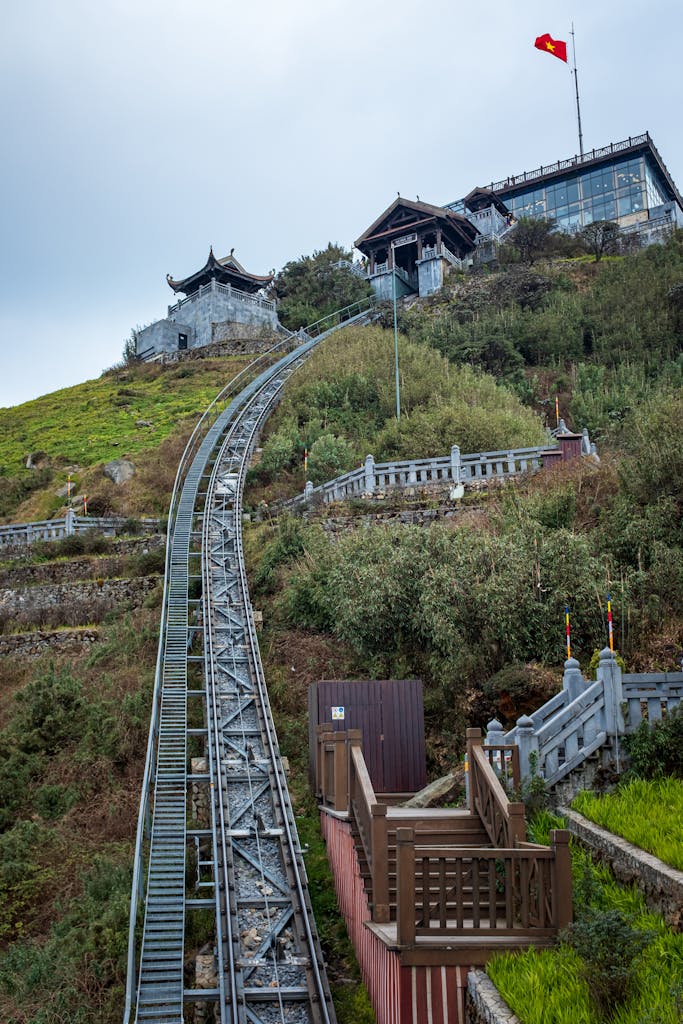
You can take a cable car up through the clouds to the highest point in Indochina. I recommend booking this small group half-day tour to make life easier than booking when you arrive.
Depending on the weather, the views are breathtaking; you can see cloud inversions or clear skies, depending on what time of year you visit.
Where To Stay In Sapa?
There are three main options to consider: Sapa Town, the outskirts of Sapa Town closer to Cat Cat Village (which is what I did), and in a homestay in one of the small villages like Ta Van or Lao Chai.

Sapa Town
The town centre is lively, with plenty of places to eat, drink, and get massages.
It’s noisier here, so if you prefer more vibrancy, choose the town. You can easily do day trips into nature from here. Whenever I went into the town, loads of people, tourists and locals, filled the streets, and it kind of felt like I was back in Hanoi.
Just not as crazy.
Outskirts Of Sapa Town
I stayed at Cat Cat Garden House, and honestly, I couldn’t believe the brilliant value, and I chose it for the views of the rice fields.
An amazing, large room with a comfortable bed, breakfast included, and one of the most stunning views for breakfast I can remember, overlooking the rice terraces. They even had a pool overlooking the rice terraces, though it was cold and not fully operational.
Book a homestay for a shorter trip with more serenity and serendipity.
Stay In A Homestay
For those who crave peace and calm.
I stayed overnight in a homestay and had the best views of Ta Van’s rice terraces. The only sound I could hear was the birds, and I could see green rice as far as the eye could see.
I stayed at Sapa May Homestay during my two-day trek tour in Sapa, and it was so comfortable.
I recommend taking one of these tours because it varies between rice terraces, small villages, waterfalls, locals from the H’mong people, and great food.
I even got to make spring rolls in the evening, but it depends on the tour.
How To Get To Sapa?
Sapa town is relatively easy to reach from Hanoi, with train and sleeper bus options available.

When I visited, I booked the train and minivan through my hotel, and it worked smoothly. Once I arrived at the train station in Lao Cai, I waited for my driver to call me, and we got into the minivan.
I was the only passenger apart from another family that time.

I chose the train because it’s overnight, which saved more daylight hours for exploring Sapa’s wonderful landscape.
Read My Guide On How To Get From Hanoi To Sapa
Best Places To Eat?
Sapa has plenty of great restaurants, so you’ll be spoilt for choice.

My favourite places include Horizon Coffee, where I met a group of friends from New Zealand. The views are stunning, and it’s super affordable. Simple pork-fired rice and juice did the job.
For some nice Indian food, try India Gate Restaurant and Ganesh Sapa Indian Restaurant. Both are very tasty. At the latter, I paid 80,000 Vietnamese dong for Pioneer butter masala steam rice, sweet lassi and a bottle of water.
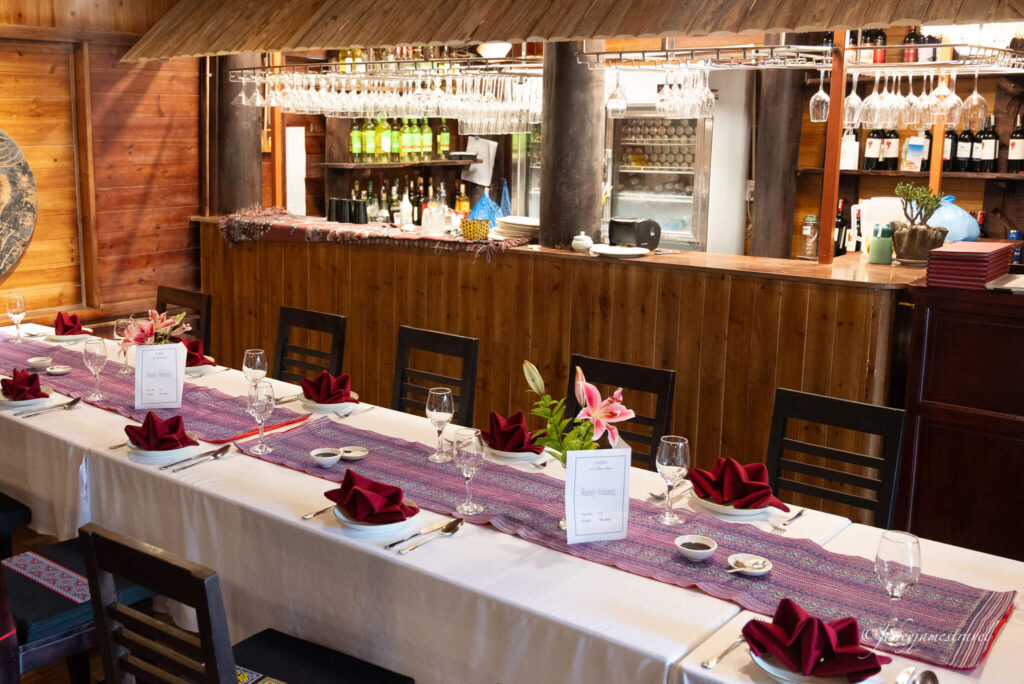
For a nice atmosphere and tasty desserts, try Le Gecko Café right in the centre of Sapa Town for chocolate mousse. I also ate great, authentic Vietnamese food at Cong Lau Nuong, where a local family gave me a shot of local vodka in a bottle.
It was strong, but it was a warm exchange which I love to have.
Mountain Bar & Restaurant is a great place to eat between Moana Sapa and Sapa Town. I recommend the seafood fried rice. White Cloud Restaurant has amazing egg coffee, chocolate ice cream and views if you want a sweet snack. I couldn’t get a better combination!

A final place to consider is La Cham Sapa Indigo Restaurant for authentic Vietnamese food. The yellow curry with vegetables and rice was superb and massive.
Sapa Town and the surrounding area have amazing food, so try as much variety as you can, especially seafood.
When Should I Visit?
The best time to visit Sapa and Sapa Town is between September and October, when the rice fields turn golden and trekking conditions are ideal.

If you visit in March, April, or May, you’ll see lots of blooming flowers and natural beauty. Lastly, if you visit between November and February (when other parts of Vietnam are warm), you’ll potentially get fresh and sometimes frosty conditions.
When I visited in July, I had some perfectly sunny days and also a couple of days of non-stop rain.

Whilst rain can limit what you can do, it makes the green landscape pop afterwards and forces me to sit still and appreciate nature because it was my only option.
I’d recommend July for far fewer tourists and lower prices.
Discover My Sapa Winter Guide To Plan Your Trip
Transportation In Sapa
Once you arrive in Sapa, it’s not like other parts of Vietnam.

Grab doesn’t work here. When I was there, I had to wave down locals passing by and arrange payment with them to bring me between Cat Cat Village and Sapa Town.
For the taxi back to the train station, I asked my hotel, Cat Cat Garden House, to book it for me.
For day trips from Sapa Town to the incredible Ô Quý Hồ, I also got my hotel to arrange a driver. She quoted me 700,000 Vietnamese dong for the whole day. We even ran over time, so I gave him an additional 300,000. It’s a long day, so it’s nice to be generous.

To get to Fansipan, you can use the cable car or you can rent a motorbike, which is very common, 120,000 to 200,000 VND (approximately $4.56–$8.00 USD).
Don’t go abroad without comprehensive travel insurance. I have used and trust Safety Wing.
Final Thoughts/Conclusion
Sapa isn’t just another tick on your Vietnam itinerary; it’s a place that reveals just how wonderfully diverse this country truly is.
If you’ve travelled through central or southern Vietnam, the north will surprise you with its cooler climate, dramatic landscapes, and distinct cultural tapestry.
Sitting on a guesthouse balcony in Ta Van, watching paragliders drift down against the backdrop of terraced rice fields, I found myself unexpectedly emotional. It’s these unplanned moments (not just the famous viewpoints) that make Sapa special.
Whilst the town itself has its charms, the real beauty lies beyond: in the rice terraces lining down the mountainsides, in remote villages where hill tribe communities are found.
Just remember – Grab doesn’t operate here, so wave down locals on motorbikes or arrange transport through your accommodation. I visited in July, and whilst there was occasional rain, most days were perfectly pleasant for exploring. Pack a light waterproof and good walking shoes, and you’ll be fine.
Sapa is honestly for the energetic traveller. If you’re trekking through rice paddies, cycling between villages, or simply climbing the town’s steep streets, you’ll need lots of energy. After five days of constant movement, I was genuinely tired, but in that satisfying way that comes from truly immersing yourself in a place.
Need more Vietnam travel tips? Join the Vietnam Travel for English Speakers Facebook group for advice from fellow travellers.
Any questions? Just drop me a message.
Thanks for reading,
James
FAQs
How Many Days Do I Need For Sapa?
Plan for 3–5 days to fully experience Sapa’s town, villages, and trekking routes. Two days work if you’re short on time, allowing you to visit Cat Cat Village and enjoy mountain views. Longer stays let you explore Ta Van Village, trek rice terraces, and experience homestays. Book accommodation in advance during peak season (September–November). The extra days are worth it for soaking in the scenery without rushing.
What Is There To Do In Sapa?
Sapa offers town exploration, Cat Cat Village, Ta Van Village, Ô Quý Hồ Pass drives, and waterfall hikes. Trek through rice terraces, visit local markets, and try hill tribe cuisine at family-run restaurants. The H’mong communities in villages provide cultural experiences and homestay options. Motorbike rentals cost around $6.00–$8.00 daily for exploring beyond town. Early morning starts give you clear mountain views before the afternoon mist rolls in.
Is Sapa Worth Visiting?
Sapa ranks among Vietnam’s top destinations for mountain scenery and cultural immersion. The town has excellent restaurants and small museums, but Ta Van and Cat Cat villages showcase authentic H’mong hospitality and traditional life. Rice terraces change colour seasonally (green in summer, golden in autumn). Northern Vietnam differs dramatically from central and southern regions in climate, landscape, and culture. Visit for active exploration rather than beach relaxation.
- Hospital Cave Cat Ba: What to Expect, How to Get There And What To See Nearby
- Cai Beo Fishing Village: The Floating Community Most Tourists Miss in Vietnam
- Monkey Island, Cat Ba: What Happened When We Arrived Unprepared
- Where to Stay in Cat Ba Island (Best Areas & Hotels Guide)
- 9 Things to Do in Cat Ba Island You Can’t Miss